
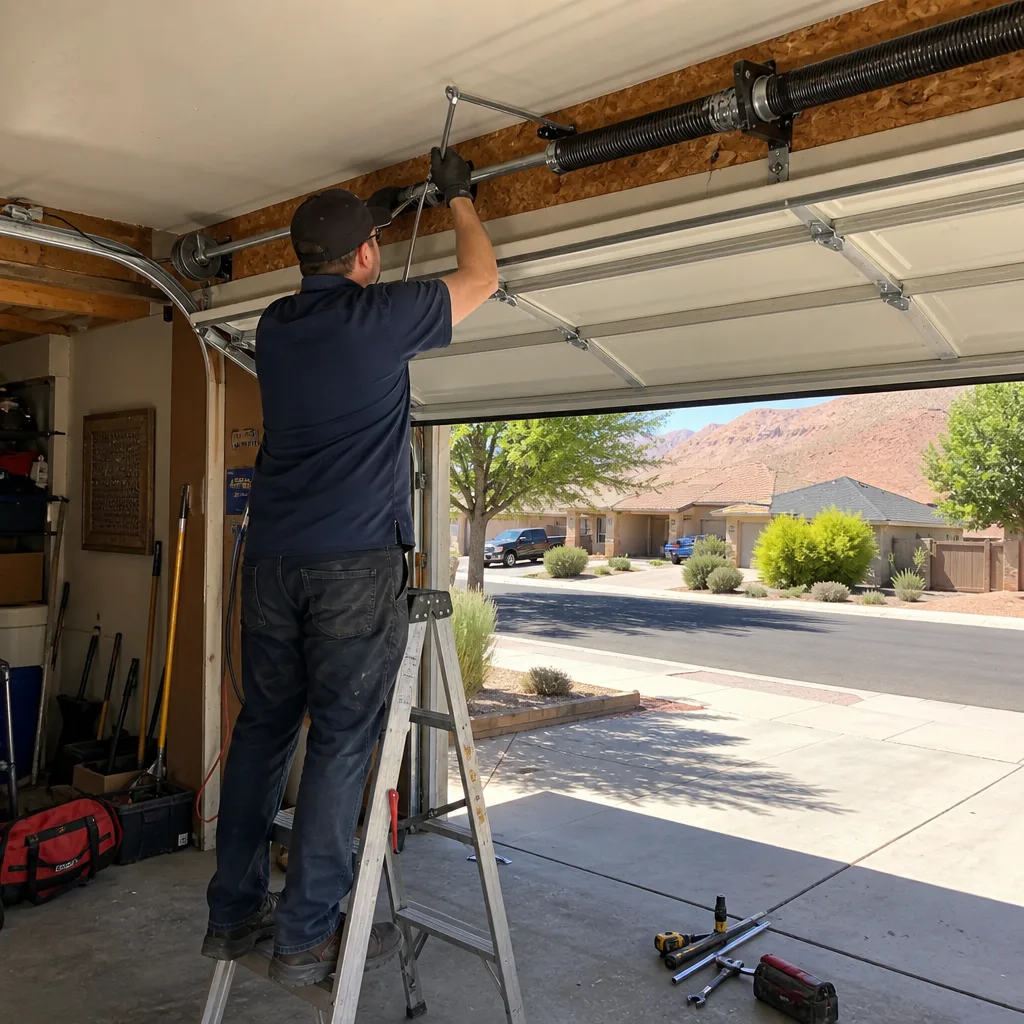
Last updated November 16, 2026
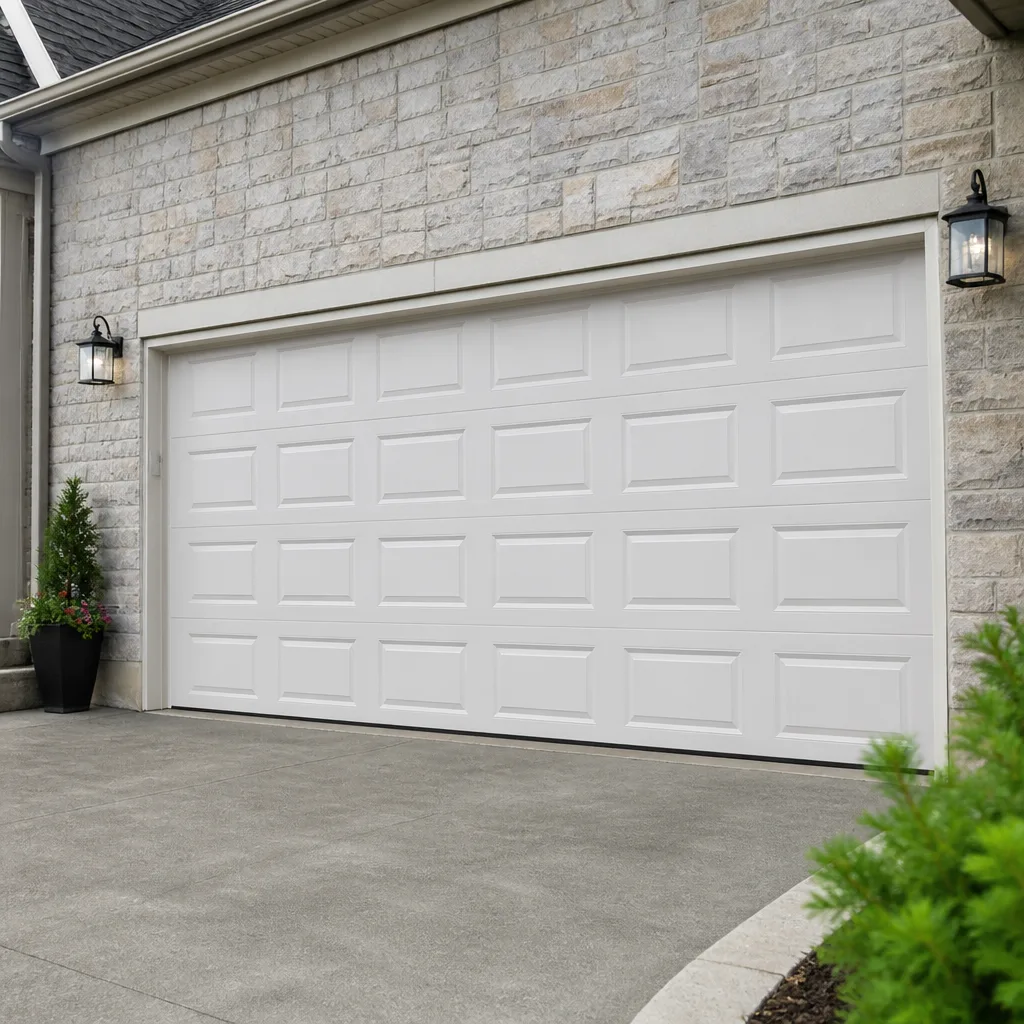 Raised-panel steel
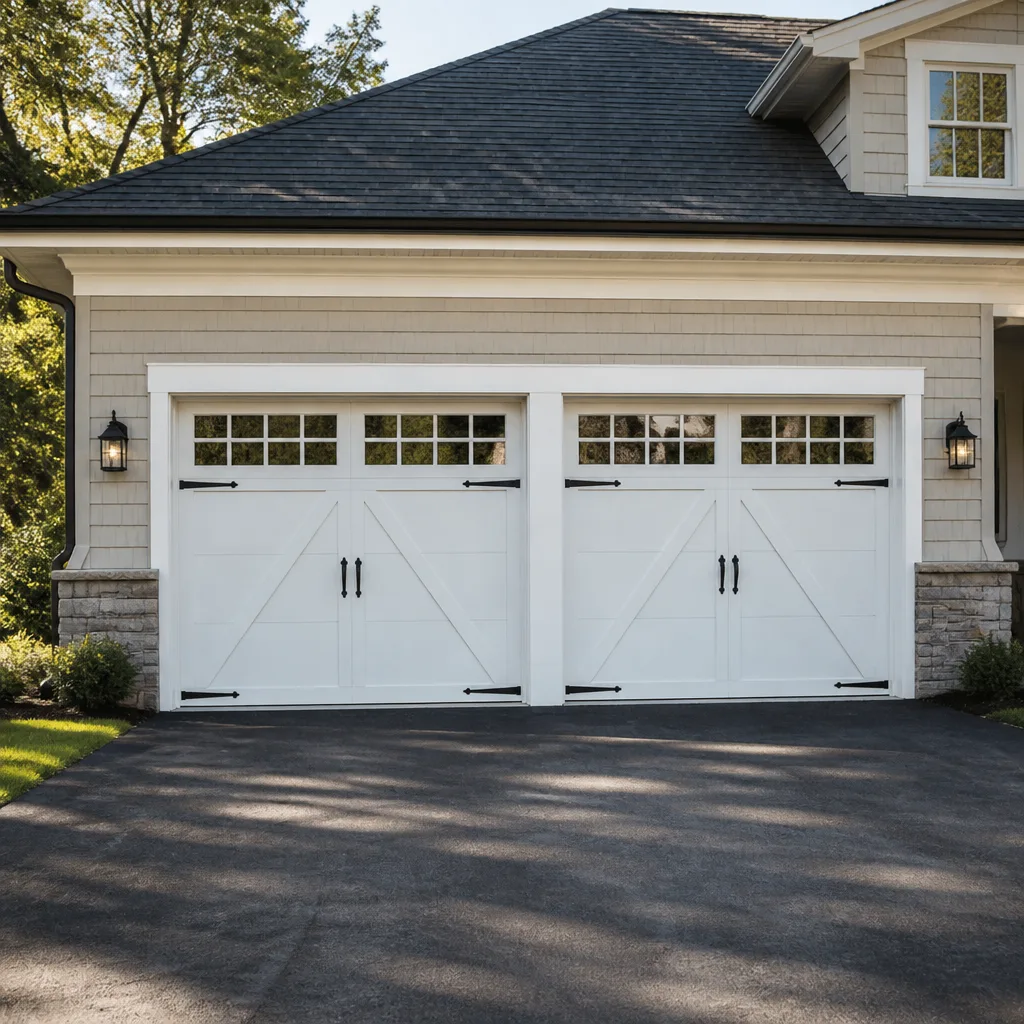 Carriage house
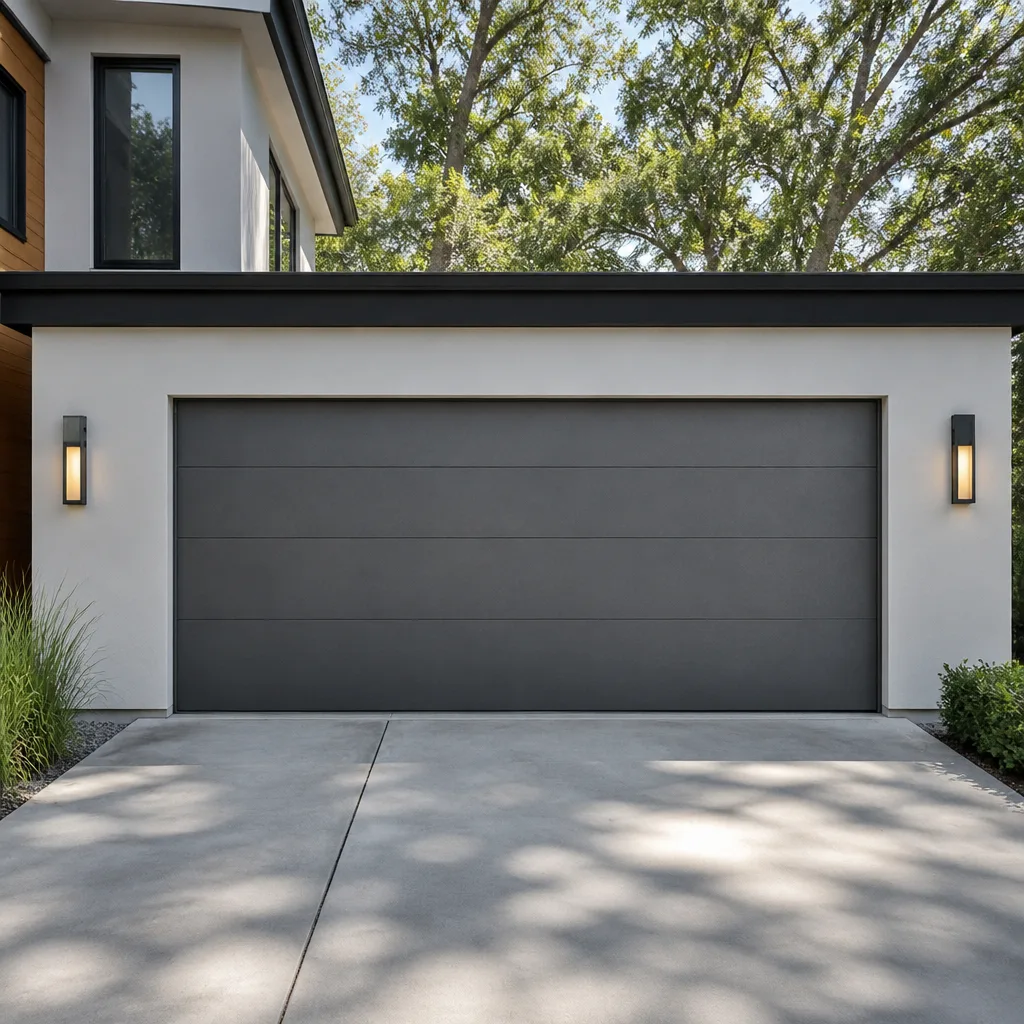 Modern flush
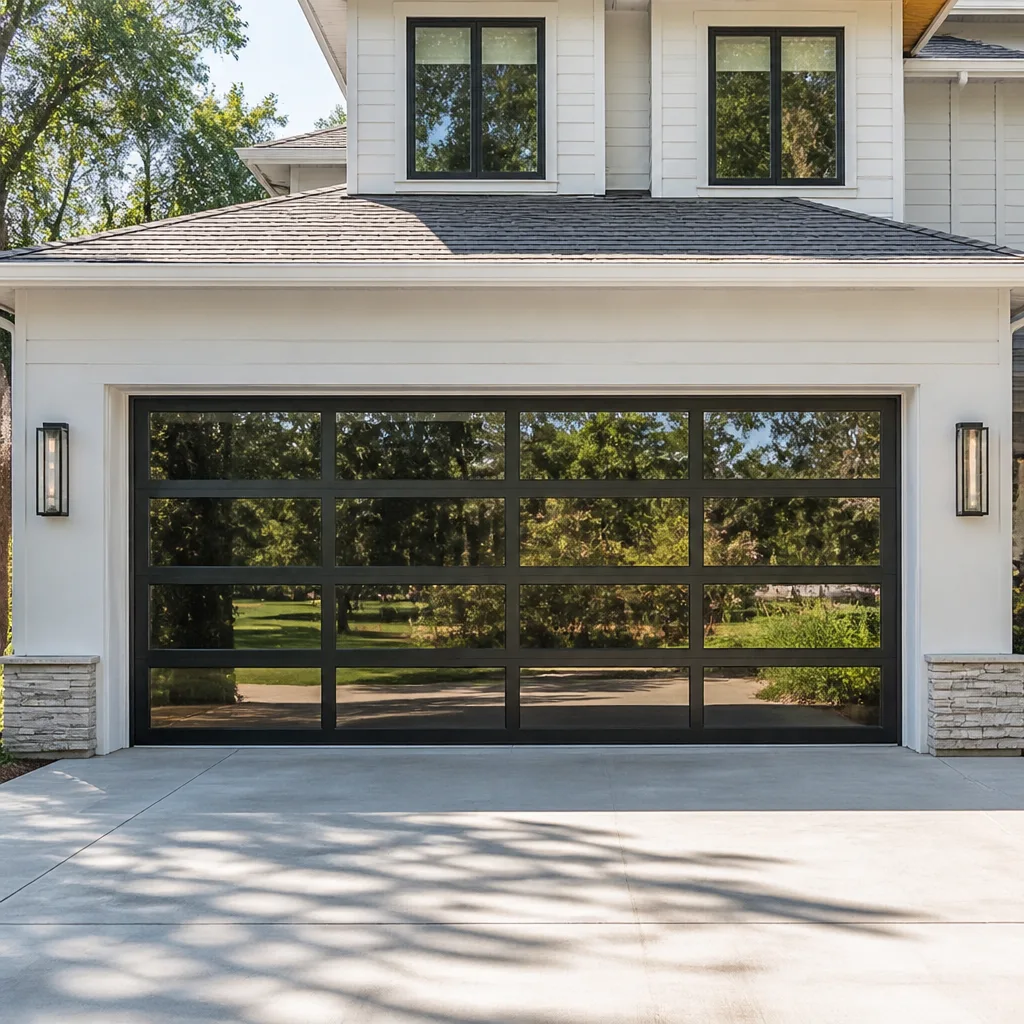 Full-view glass
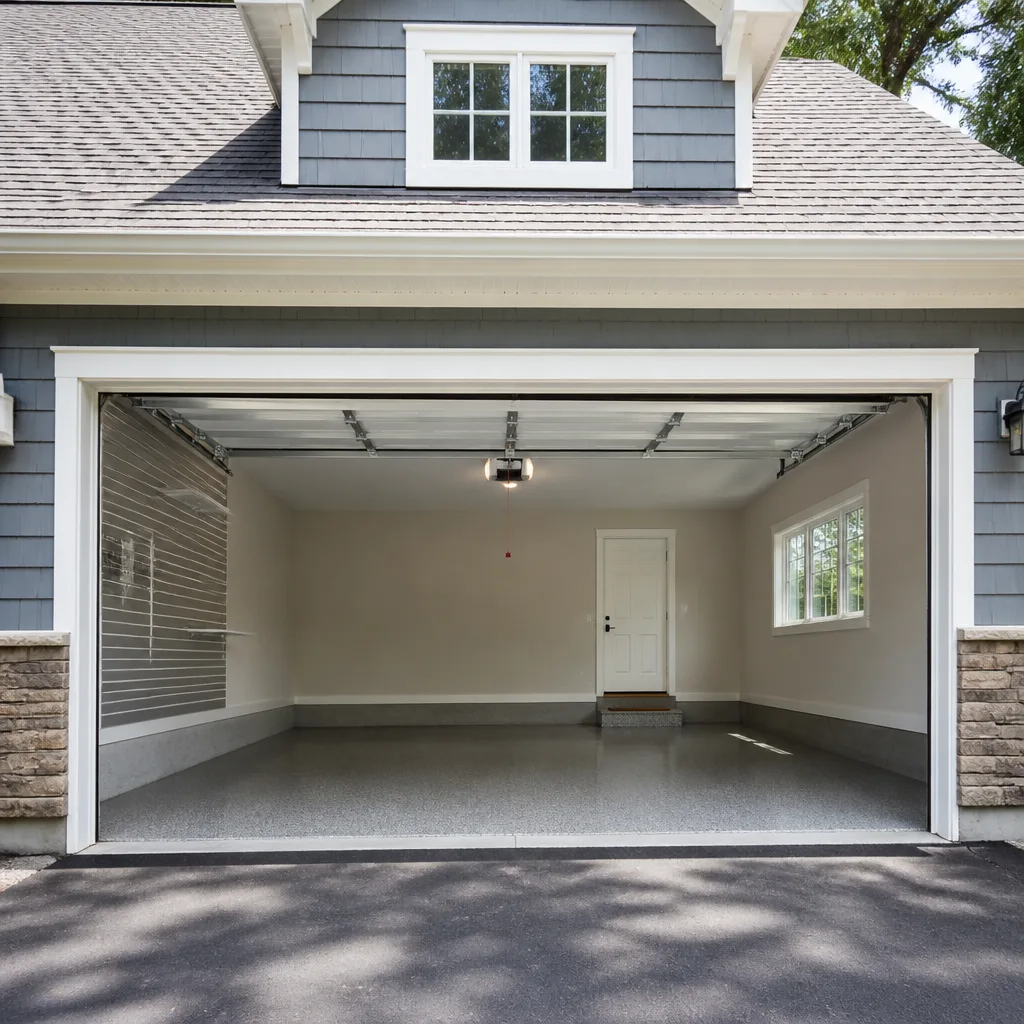 LiftMaster openers
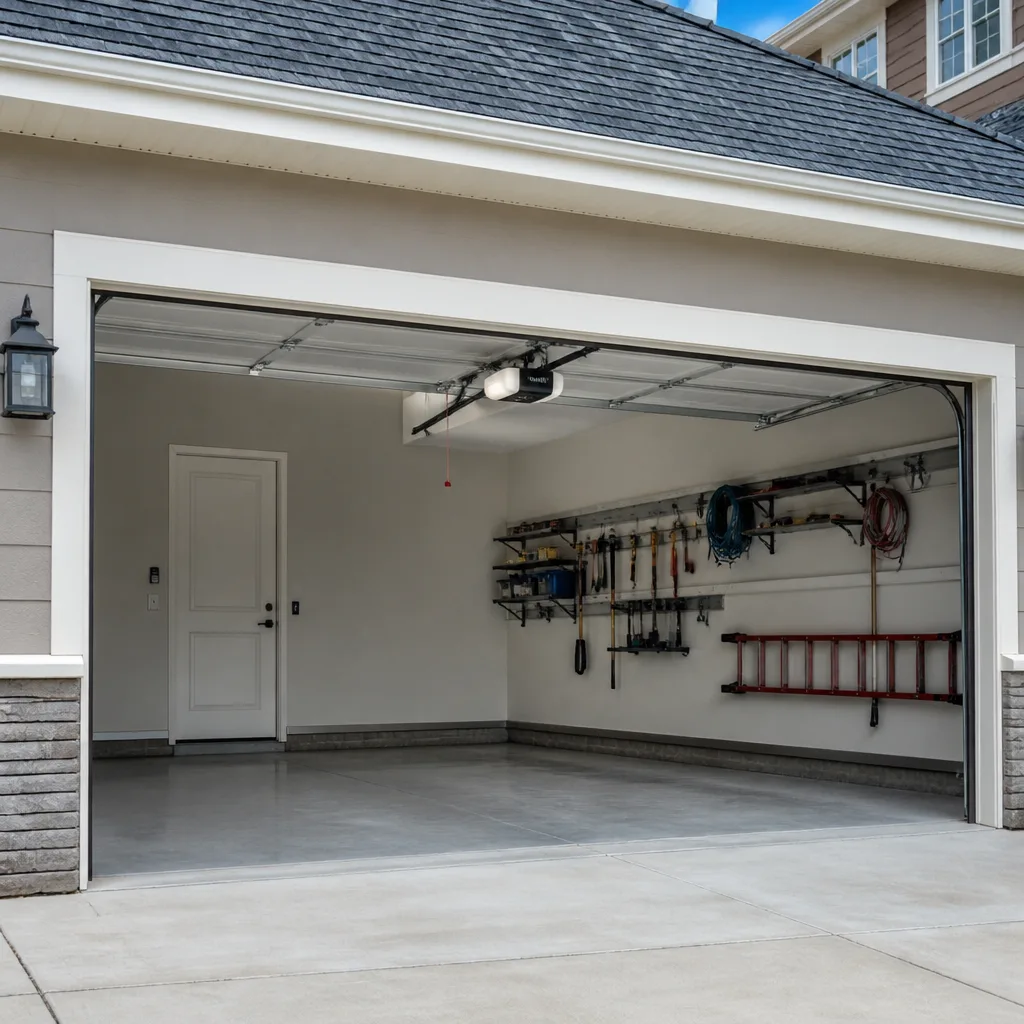 Chamberlain openers
Full 25-point door and opener safety check with every visit - springs, cables, rollers, tracks, and your LiftMaster or Chamberlain opener included
You get a price before we start. It does not change when the pro arrives.
Get your free estimateGarage Door Emergency Preparedness Guide for St. George Homes
When a garage door spring snaps at 6:30 a.m. and your car is inside, you have about three options, and two of them will damage the door further or put someone in danger. Most homeowners don’t find that out until it happens. We’d rather you knew the third option now. St. George throws a specific mix of stresses at garage doors: summer heat that pushes openers and springs to their limits, cold January mornings that make steel cable brittle, and monsoon-season power cuts that leave a door stuck. This guide walks through each one, from manual release to temporary security, so the next failure is an inconvenience instead of a crisis.
Quick Answer
If your garage door fails in St. George with the car trapped, don’t force it. If a spring is broken or the door feels unusually heavy, call a garage door professional and do not pull the manual release cord, because the door can drop under its own weight. If the door is balanced and the failure is power or opener-related, use the red release handle and lift the door by hand. Have your door’s brand, model, and opener details ready before you call.
Styles & brands we work with
- Raised-panel steel
- Carriage house
- Modern flush
- Full-view glass
- LiftMaster openers
- Chamberlain openers
Table of Contents
- Why St. George Doors Fail Differently
- Getting the Car Out After a Spring Failure
- Power Outage Protocol for Monsoon Blackouts
- What to Do When an Opener Overheats
- Temporarily Securing a Door That Won’t Close
- Build an Emergency Reference Card
- Who to Call and What to Have Ready
- Seasonal Checks for the Desert Year
Why St. George Doors Fail Differently
Garage doors fail everywhere, but the way they fail tracks local conditions. St. George sits lower and hotter than the surrounding high country, and a garage on a west-facing wall in the middle of July absorbs heat all afternoon. That heat works on the torsion spring, the opener motor, and the plastic and logic components inside the opener housing. By the same turn, a January morning in outlying areas around St. George can drop close to freezing, and cold makes the steel cables less forgiving while the door panels contract.
We see three failure windows repeat: the dead of summer, the first hard cold snaps of winter, and any afternoon when a monsoon storm knocks out power across a neighborhood. Each demands a different response, and using the wrong one can turn a repair into a full replacement.
Here’s what makes a door misbehave in each window:
- Extreme heat: opener motors overheat and shut down on thermal protection, springs lose tension unevenly, and safety sensors can drift as plastic housings expand.
- Cold snaps: cables stiffen and can snap under load, and lubricant thickens, making the door harder to lift.
- Monsoon power cuts: the opener loses its travel limits and won’t respond until it’s re-engaged and reset.
- Dust and grit: desert wind pushes fine dust into rollers and hinges, raising friction on every cycle.
Knowing which window you’re in tells you what’s actually wrong before the technician arrives. For a closer look at how we approach repairs across Rosemont Garage Door Service, start there.
Getting the Car Out After a Spring Failure
This is the scenario that matters most, because it’s the one where the wrong move is dangerous. A torsion spring does the heavy lifting of a door that can weigh well over a hundred pounds. When it breaks, that weight is no longer balanced. The door can drop fast, and a person lifting it by hand is exposed to the full load.
The single most important rule: if you have a broken spring, do not pull the manual release cord to get the car out. The release disconnects the door from the opener, and a door with no spring tension can slam closed. The safe path isn’t through the door.
So how do you get the car out? You have three options, in order of preference:
- Wait for a technician and open the other bay. If you have a second garage door, use it. If your car is behind the failed door, move it later. This is the safe option and the one we recommend first.
- Call for same-day repair. A broken spring is fixable the same day in most cases. Call (866) 389-3687. We answer 24/7. Fast dispatch from 7am to 7pm, Sunday through Friday. A technician re-tensions or replaces the spring with the right parts for your door.
- Move the car out the front door of the house, if it’s reachable. If your driveway and front path let the car exit another way, use it. It beats wrestling a dead door.
There is one case where manual release is defensible: the door is fully balanced, the springs are intact, and only the opener has failed. In that case the door is light enough to lift by hand. If it feels heavy at all, stop. If you’re not sure, treat it as a broken spring and call.
If you want to understand what’s involved in this repair, our garage door repair team handles broken springs, cables, and rollers. The spring itself is a tightly wound high-tension component. Leave it to a trained technician.
Power Outage Protocol for Monsoon Blackouts
Monsoon season in St. George brings brief, intense storms, and their most common side effect at home is a power cut that outlasts the rain. When the opener loses power, the door stays wherever it was, usually closed, with your car behind it. You can operate it by hand, but only if you disengage the opener the right way.
The manual release is the red cord or handle hanging from the opener trolley. Pull it downward and toward the door. That disengages the trolley from the door arm, and the door lifts by hand, if it’s balanced. Once power returns, pull the cord again to re-engage the trolley, then run the opener through a full open-and-close cycle so it resets its travel limits.
Two things people get wrong during a blackout:
- Pulling the release with a broken spring. Covered above. If the door is heavy, don’t release it. If you’re locked out and the door is your only route, call for help.
- Re-engaging the trolley while the door is open. The opener needs to reconnect with the door in a specific position. Close the door by hand first, then re-engage, then cycle it once with the opener.
If your opener is a LiftMaster, Chamberlain, or Genie, most models have a battery-backup option, and a technician can tell you whether yours supports one. That’s the kind of question that’s better answered before the next storm. Our garage door opener repair team can check your model and wire in a backup if it’s compatible.
What to Do When an Opener Overheats
In mid-July, an opener that stops responding partway through a cycle has often simply overheated. Modern openers have thermal protection built in. The motor gets too hot, shuts itself down, and comes back after it cools. If your door stops in July and the opener is warm to the touch, that’s the likely cause.
What to do:
- Stop pressing the button. Repeated activation keeps the motor from cooling and can trip the logic board into a fault that needs resetting.
- Let it cool for 20 to 30 minutes. Most openers will resume on their own once they cool.
- Check the door balance by hand once your car is out, if the opener has recovered. Lift the door halfway by hand and let go. A balanced door stays put. A door that drops is straining the opener, which is what caused the heat in the first place.
- Inspect the safety sensors. A misaligned sensor, common in St. George heat as plastic housings expand, makes the opener run against a closed limit and heat up faster.
Do not fix an overheated opener by forcing the door up by hand with a failed spring still attached. That combination is the most dangerous one in this whole guide. If the door is heavy and the opener has stopped, you have a spring or balance problem, and you need a technician, not a ladder.
Opener problems on a Clopay or Amarr door are often opener-specific, not door-specific. A trained technician isolates the actual failure, whether that’s a motor, a logic board, a remote, or the sensors, rather than defaulting to replacing the whole unit. Rosemont treats opener repair as its own discipline for exactly that reason.
Temporarily Securing a Door That Won’t Close
A door that won’t close is a security problem. Without power, or with a broken cable, the door can sit partway down and leave the house open to the street or the alley. You need a temporary fix that holds until the technician arrives. Some things from a standard garage work well. Others don’t.
What works:
- Vice grips or a C-clamp on the vertical track, clamped just above a roller, will stop the door sliding back down. Put one on each side if you have two.
- A length of 2×4 cut to fit the inside width of the opening, wedged under the bottom edge, props the door in a closed-ish position.
- Cargo straps or ratchet straps from the door’s bracket to a solid anchor in the garage frame will hold it in place.
What doesn’t work, and why:
- Rope or bungee cord tied to the track will slip. The door’s weight is more than most rope can hold, and under tension rope fails without warning.
- Books or bricks under the bottom edge only work on a door with intact cables and springs, and they’ll let it ride down the moment weight shifts.
- A chair against the bottom panel won’t stop a full-weight door and can tip into the opening.
Once the door is held, take a photo of the position and note any noises it makes. That’s information your technician can use. If you’d rather have the door secured by someone who does this every day, call us. We’ll dispatch a technician fast.
Build an Emergency Reference Card
In an emergency, you don’t want to be looking up model numbers while your car is trapped. A pre-filled card taped to the inside of the garage door frame (or the wall next to the opener) gives you and anyone in your household what they need in one place. Fill it in once, keep it current, and it pays off the day you need it.
Copy this format onto an index card or print it out:
- Our garage door technician: Rosemont Garage Door Service, (866) 389-3687. We answer 24/7. Fast dispatch from 7am to 7pm, Sunday through Friday.
- Door brand and model: ____________________ (look on the inside of the bottom panel or the edge frame)
- Opener brand and model: ____________________ (usually a label on the motor housing or the wall unit)
- Door size: width ____ x height ____ (a single car door is typically around 8 or 9 feet wide)
- Spring type: torsion (bar above the door) or extension (springs along the tracks)
- Number of doors on the property: ____
- Safety sensors: yes / no
- Battery backup on opener: yes / no / not sure
- House alarm or gate code for technician access: ____________________
Two minutes filling this in saves a lot of scrambling. Keep a second copy in the house, and if you have a door with a modern Chamberlain or Genie opener, note the model, because those names alone speed up matching the right replacement parts.
Who to Call and What to Have Ready
Call for a garage door emergency in St. George when the door is stuck with a car inside, when a spring or cable has visibly failed, when the door won’t close and leaves the house open, or when an opener has stopped responding and resetting didn’t help. Call (866) 389-3687. We answer 24/7. Fast dispatch from 7am to 7pm, Sunday through Friday.
The estimate is free and the written estimate sets the price before any work starts. When you call, have the card from the section above in hand if you can. If you don’t have it, the basics are enough: the door brand and model, what happened, whether the car is trapped, and whether any spring is visibly broken.
When a technician arrives, here’s the sequence we follow:
- Assess the door and springs: check balance, tension, and the state of the cables.
- Diagnose the opener separately if the door hardware is sound. That’s the part that catches people, because an opener fault on a healthy door is a small repair, not a replacement.
- Quote the repair in writing before touching the door, with the parts named.
- Complete the repair and test the door through full open-and-close cycles so you know it’s right before the technician leaves.
That order matters. It’s why we treat repair first and recommend replacement only when the door’s structure or balance genuinely requires it. If the door is at that stage, our garage door repair page breaks down the repair-to-replace decision.
Seasonal Checks for the Desert Year
A little maintenance in St. George goes a long way toward avoiding the emergency call. Four times a year, take twenty minutes to look at the door with the opener off.
- Spring check: look for a visible gap in the torsion spring, or a bent, separated extension spring. A broken spring is a call for a technician, not a repair you attempt.
- Cable check: look for fraying at the drum or a loose, slack cable. Never touch a cable under tension.
- Roller and hinge lubrication: a light garage door lubricant on the rollers, hinges, and spring bearings cuts friction, which matters in desert dust. Not WD-40 on the springs; it attracts grit.
- Balance test: with the door disconnected from the opener, lift it halfway by hand and let it go. A balanced door stays in place.
- Sensor alignment: confirm the two sensors see each other. If the indicator light flickers, nudge the bracket back into alignment.
- Panel and frame check: after a monsoon wind event, walk the perimeter. A dinged panel or a frame that no longer sits square is worth a look before it becomes a track problem.
If any of these checks make you uneasy, call before it fails. That’s the cheapest repair you’ll ever do.
Common Mistakes to Avoid
- Pulling the manual release with a broken spring. We covered this, but it bears repeating because it’s the most common and most dangerous mistake. A door with no spring tension can fall on anyone underneath. Wait for a technician.
- Pressing the opener button repeatedly on an overheated motor. In a St. George July, a stopped opener is often just hot. Pressing the button again and again keeps it from cooling and can put the logic board into a fault.
- Forcing a door by hand that won’t lift smoothly. If it takes real effort, something is wrong with the balance or springs. Force bends the panels and twists the track.
- Using rope or bungee cord to hold a door that won’t close. These can slip or fail. Use vice grips or a clamp on the track, or a 2×4 wedge.
- Treating the opener as a standalone appliance. If the door is heavy and the opener is laboring, the door is the problem. Replacing the opener won’t fix the door.
- Ignoring a broken cable or a bent track. Both put the door at risk of coming down unexpectedly and both get worse with use. Call early.
- Not having any door information ready before an emergency. The two minutes it takes to fill out a reference card saves confusion and gets the right parts to the door faster.
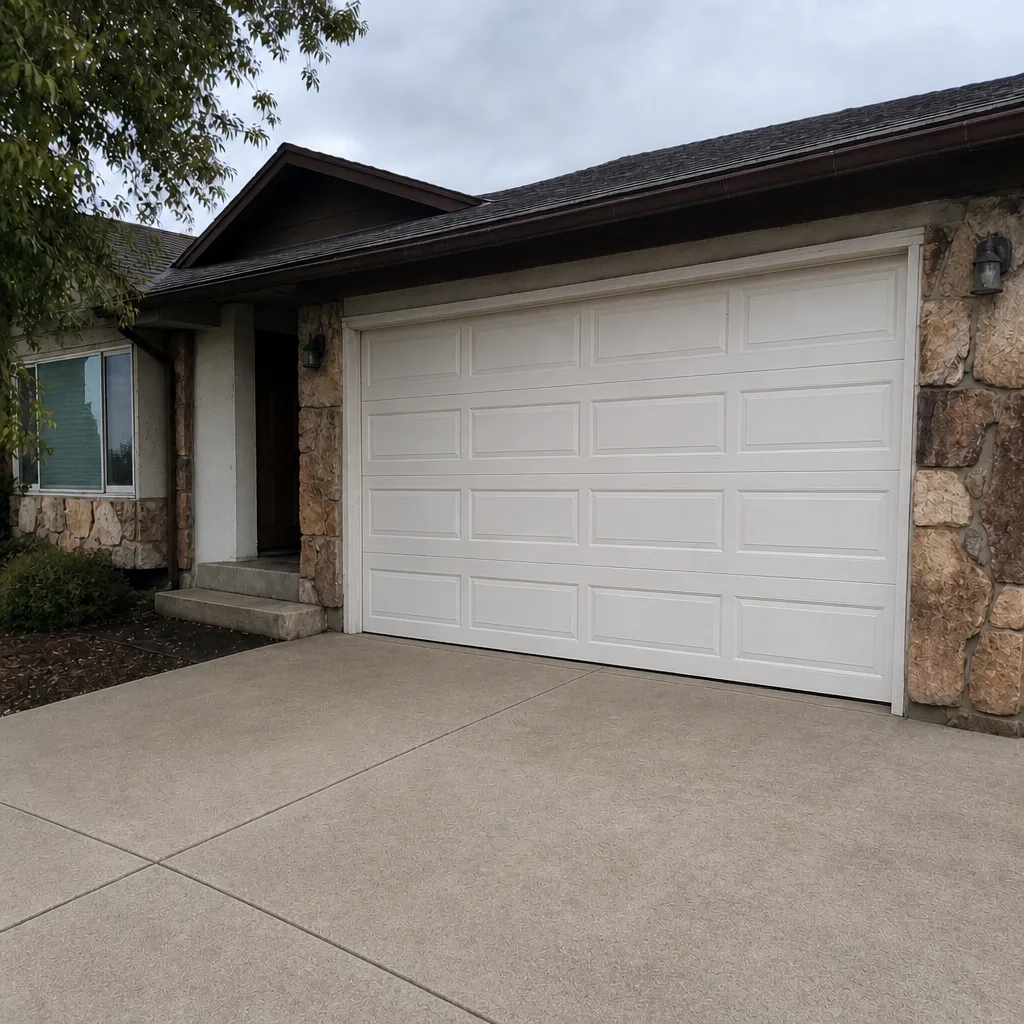
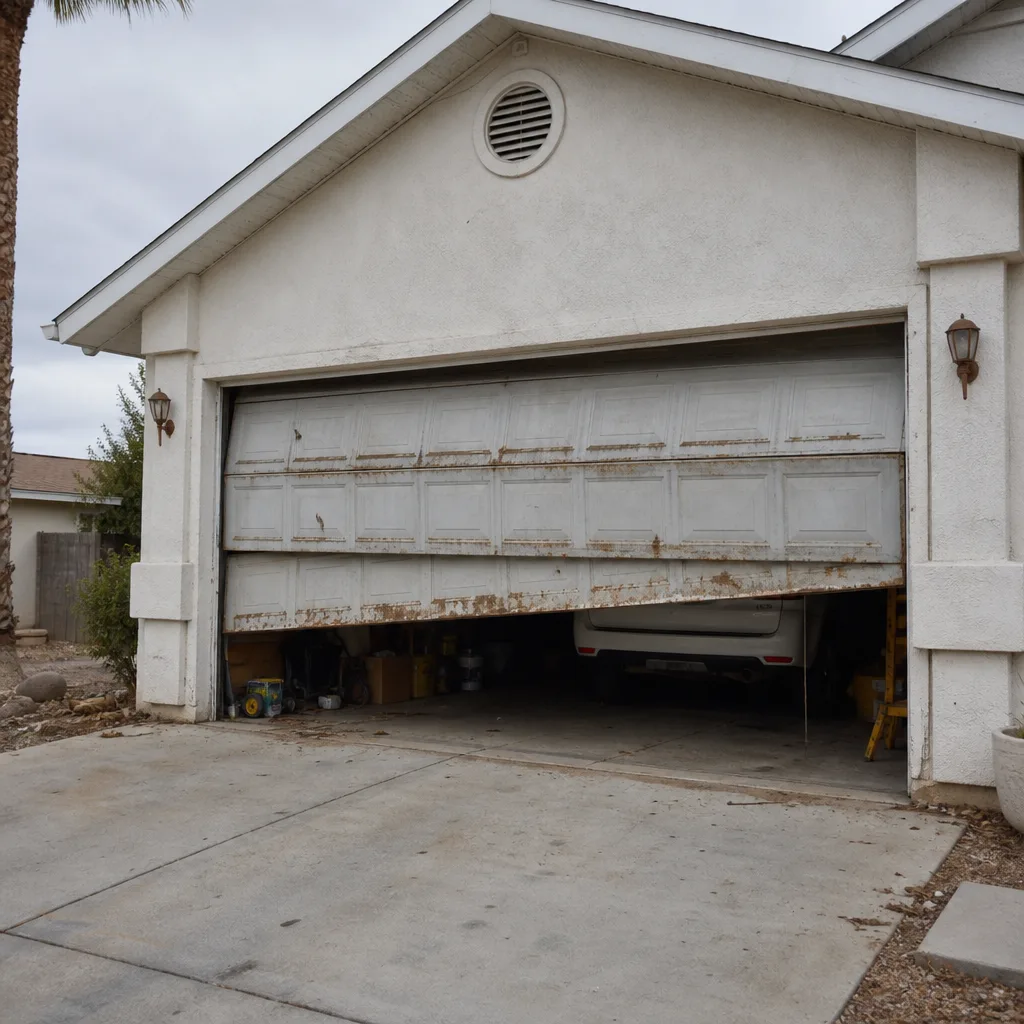
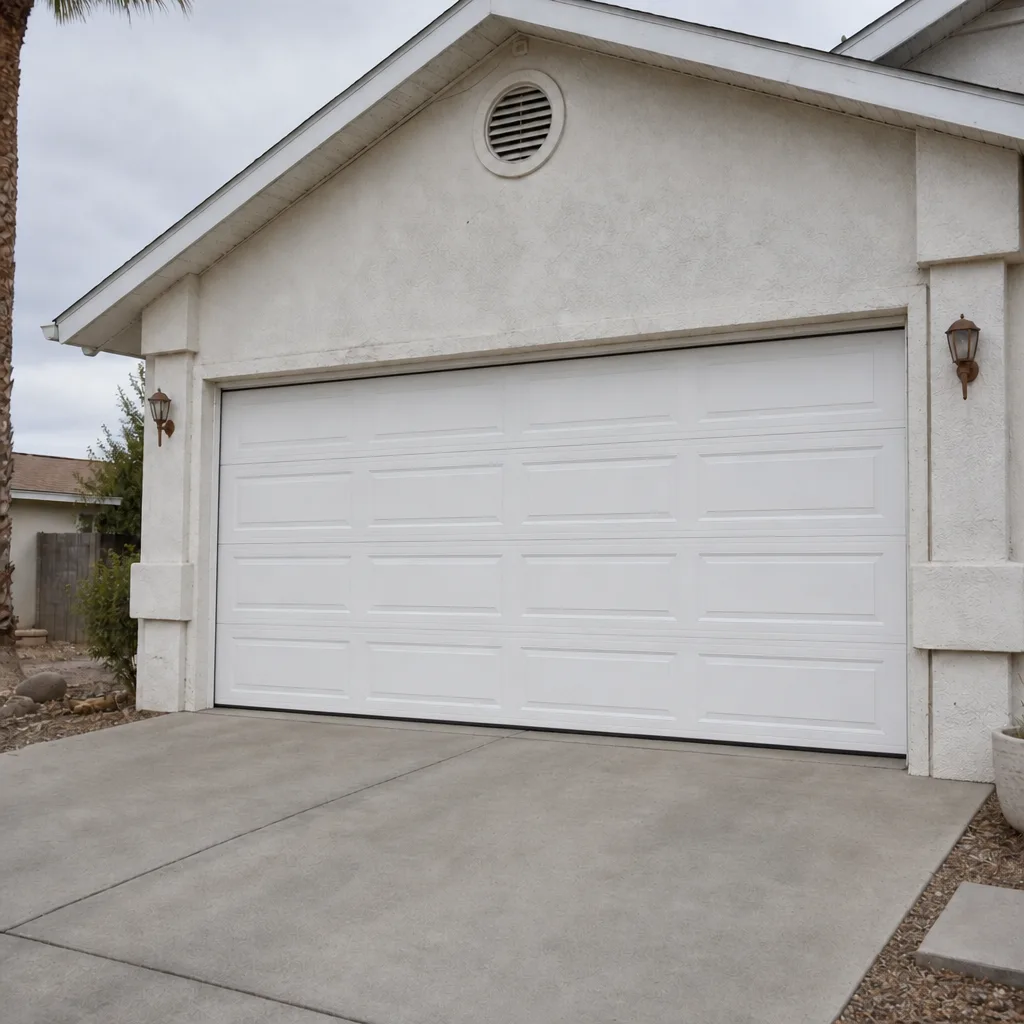
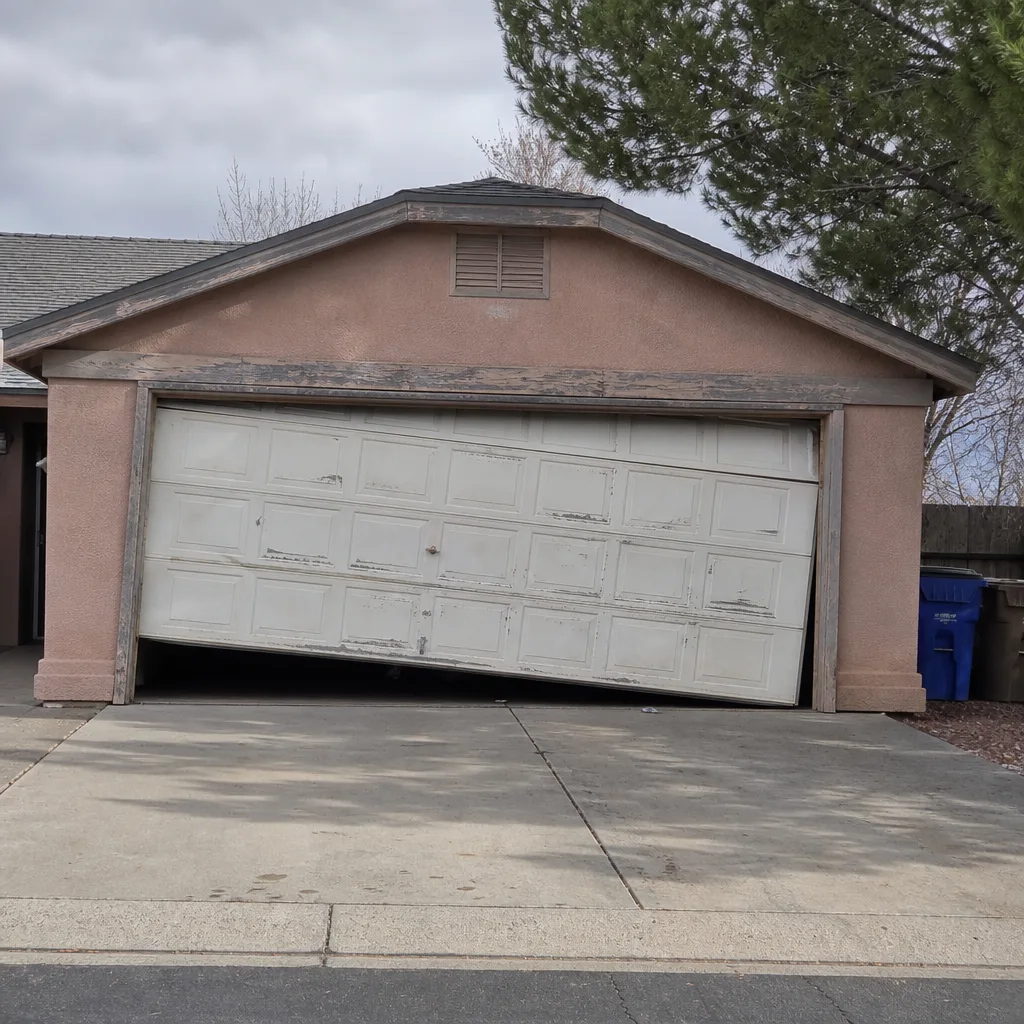
See the difference
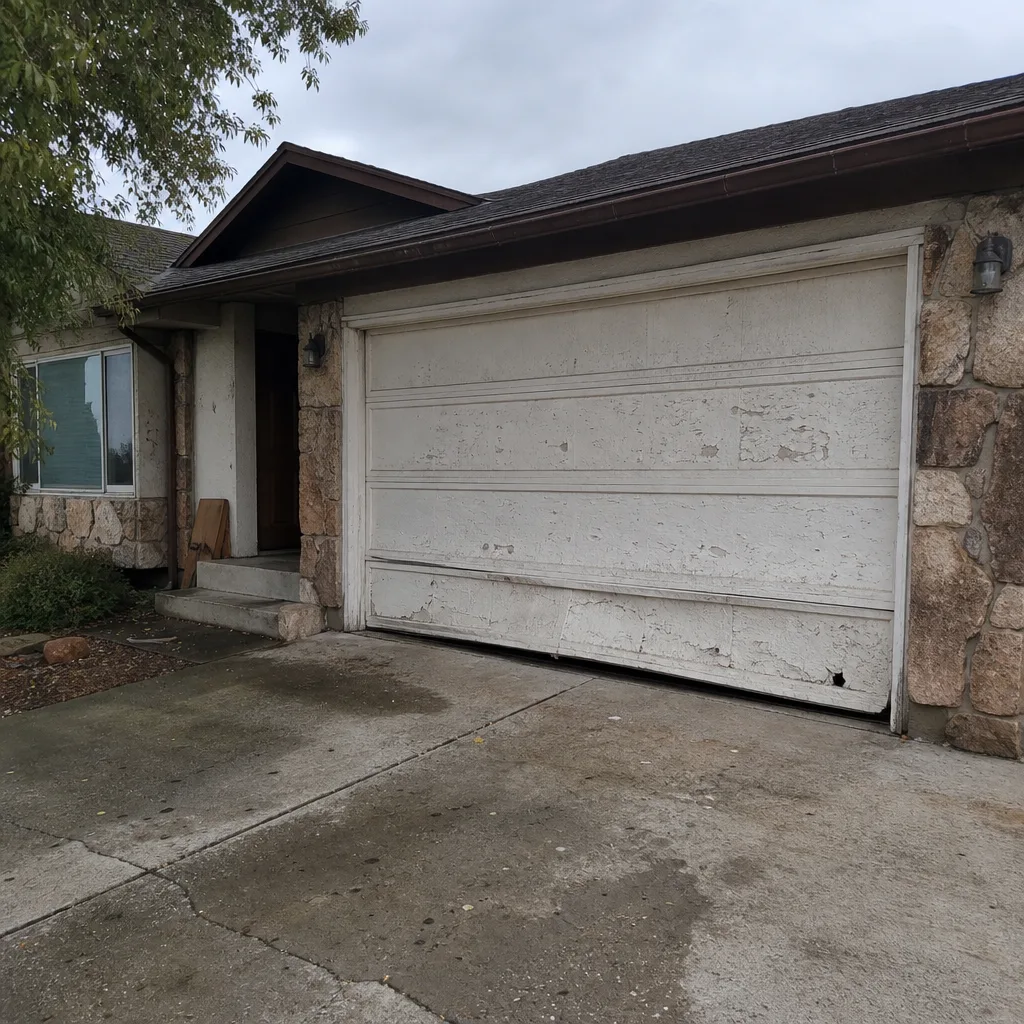 Before
 After
 Before
 After
 Before
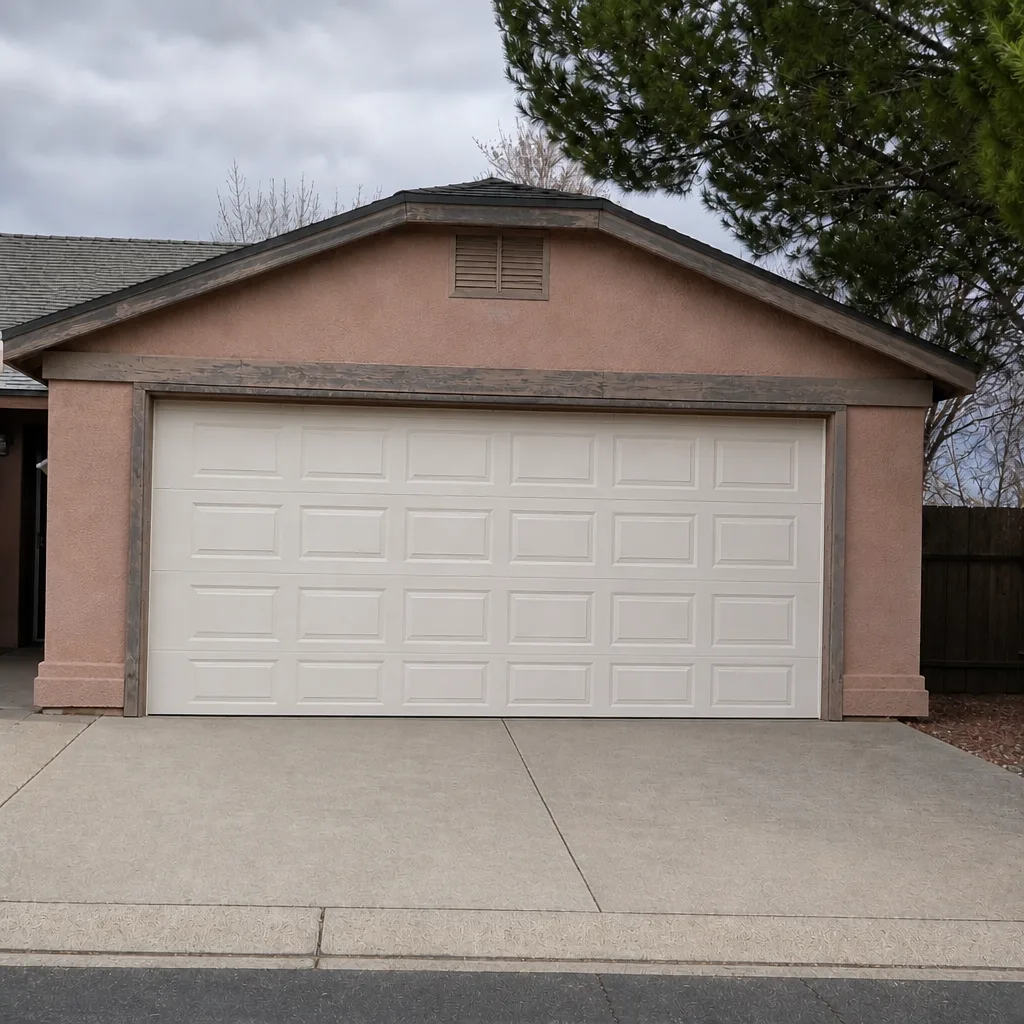 After
When to Call a Professional
Call a professional when a spring or cable has failed, when the door won’t close and the house is open to the street, when the car is trapped behind a door that feels heavy, or when an opener has stopped and a reset hasn’t fixed it. Call when the door has started to make a popping or grinding noise it didn’t make before. Call when you’re locked out and the garage is your only route. And call before a monsoon season if you want an opener with battery backup checked. Rosemont Garage Door Service offers free estimates in St. George, so call (866) 389-3687. We answer 24/7. Fast dispatch from 7am to 7pm, Sunday through Friday. The estimate is free and the written estimate sets the price before any work starts.
Frequently Asked Questions
Not safely through the same door. A broken spring means the door has no lifting assist and could drop. Do not pull the manual release. Call a technician, and if you have a second bay, use that door instead. The repair is usually done the same day.
Use the manual release handle on the opener trolley, pull it toward the door, and lift the door by hand if it’s balanced. Once power returns, close the door first, then re-engage the trolley and run the opener through a full open-and-close cycle. Never use the release if the door is heavy or a spring is broken.
Probably not. Opener motors have built-in thermal protection and shut down when they get too hot. Let it cool for 20 to 30 minutes before trying again, and check the door balance so the opener isn’t straining. If it stops again after cooling, call for a diagnosis.
Clamp a vice grip or C-clamp onto the vertical track just above a roller to stop the door sliding back, or wedge a length of 2×4 across the inside of the opening. Rope and bungee cords are not reliable. Once it’s held, call for repair.
Have the door brand and model, the opener brand and model, whether the car is trapped, whether a spring is visibly broken, and whether you have more than one door. That information matches the right technician and the right parts to your door faster.
Yes. Our technicians are experienced, insured, and work only on garage doors and openers. They’re familiar with the major brands already installed in St. George homes, including LiftMaster, Chamberlain, Genie, Clopay, Amarr, Wayne Dalton, Craftsman, and Raynor, so the fix matches your actual system. Our technicians have up to 13 years of experience.
The Bottom Line
Garage door emergencies in St. George follow a pattern, and knowing the pattern is most of the protection. Heat in July and August overheats openers and strains springs. Cold snaps in January snap cables. Monsoon storms cut power and trap cars. Your job is to know the difference: pull the manual release only when the door is balanced and intact, never with a broken spring, and always have a filled-out reference card on the garage wall. The worst outcome is a person hurt under a falling door or a small repair turned into a full replacement. For a look at how we handle St. George homes, call (866) 389-3687 for a free estimate.
Written by the team at Rosemont Garage Door Service.