
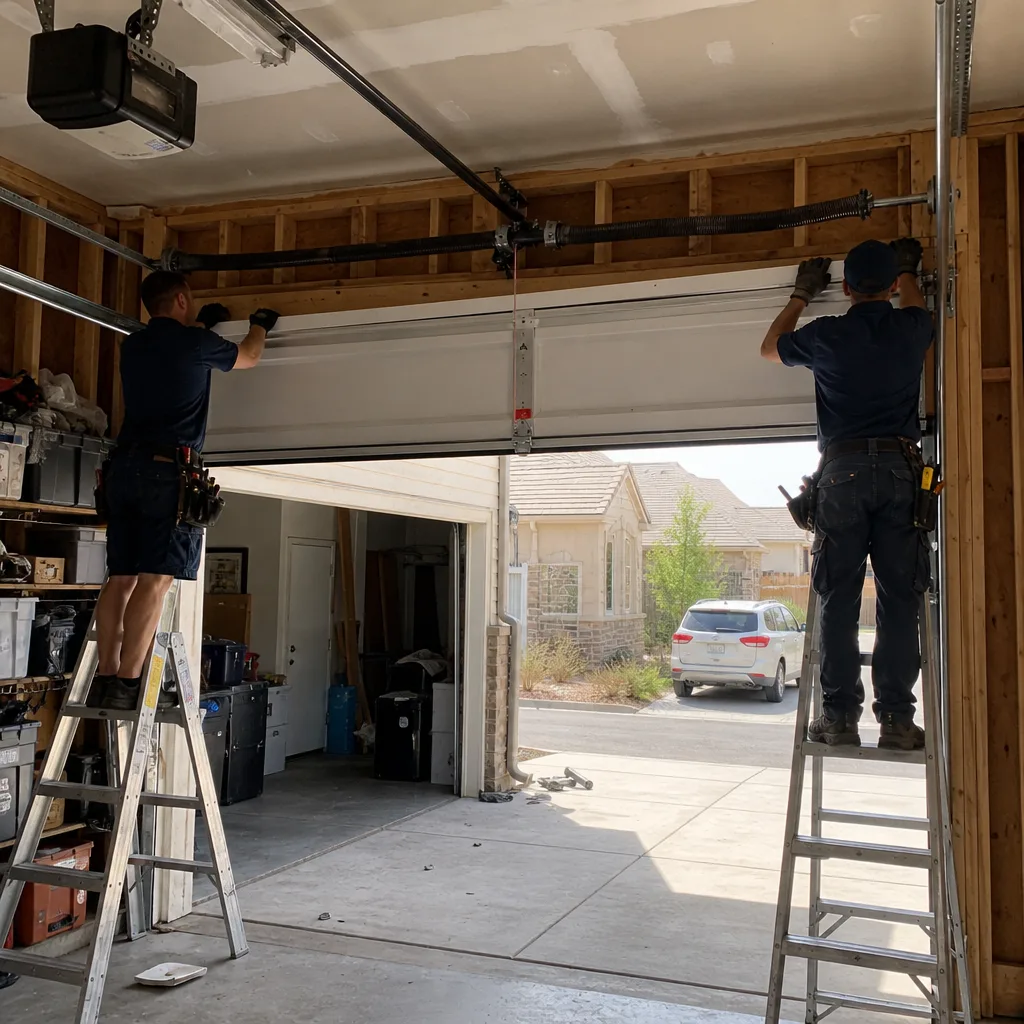
Last updated November 16, 2026
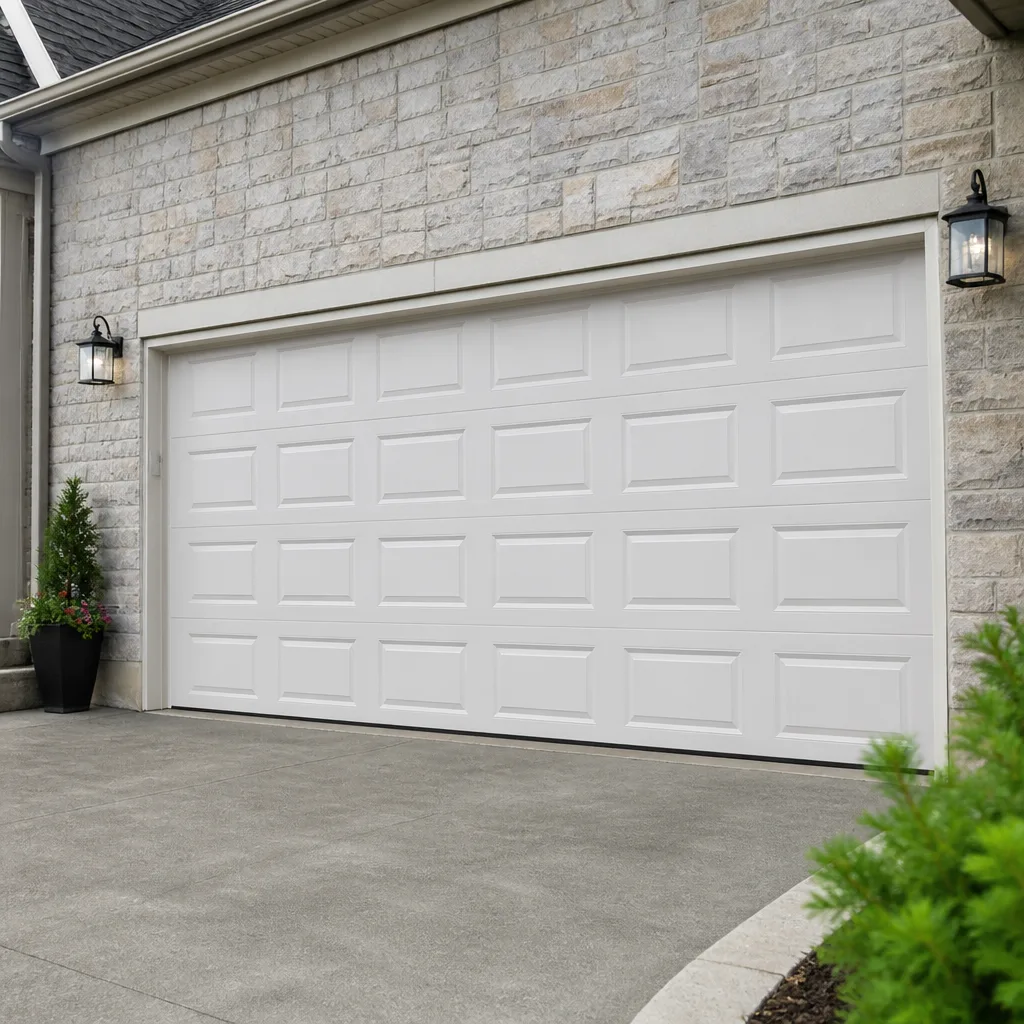 Raised-panel steel
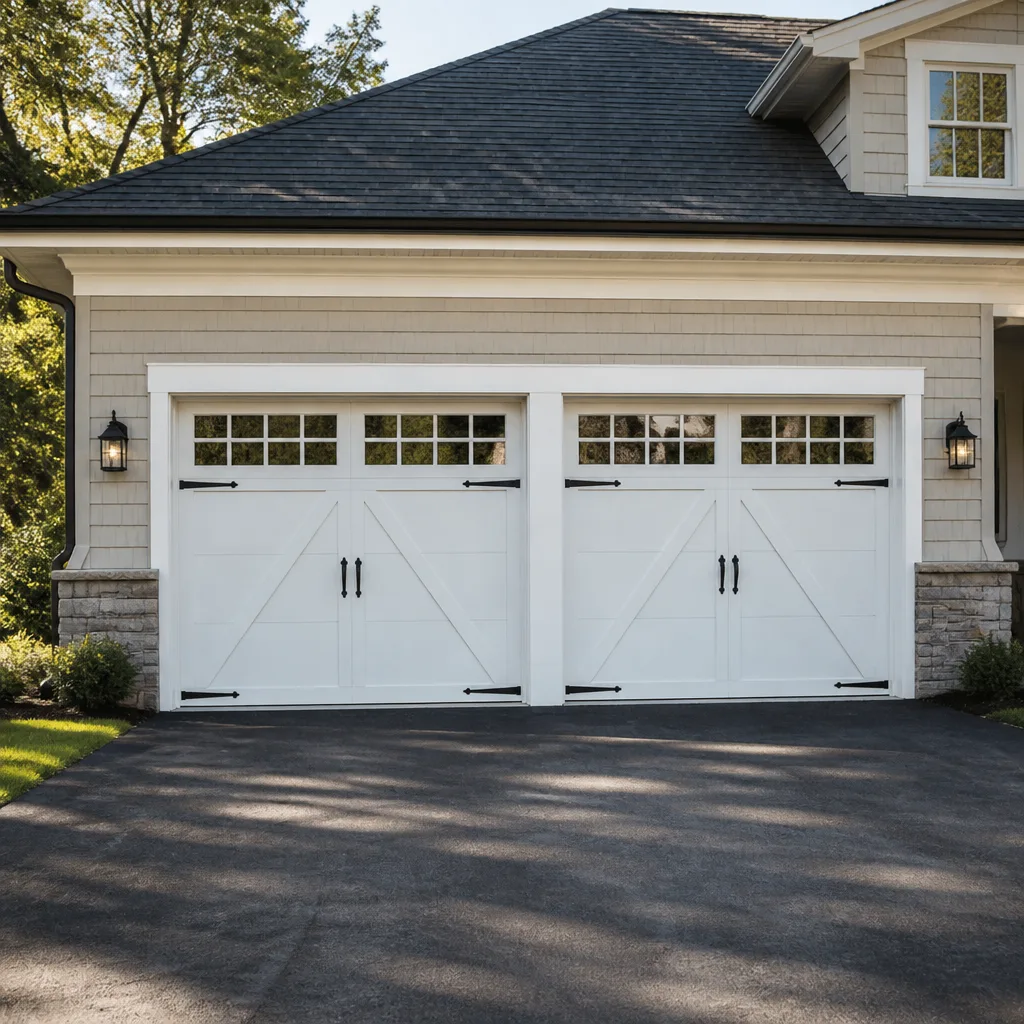 Carriage house
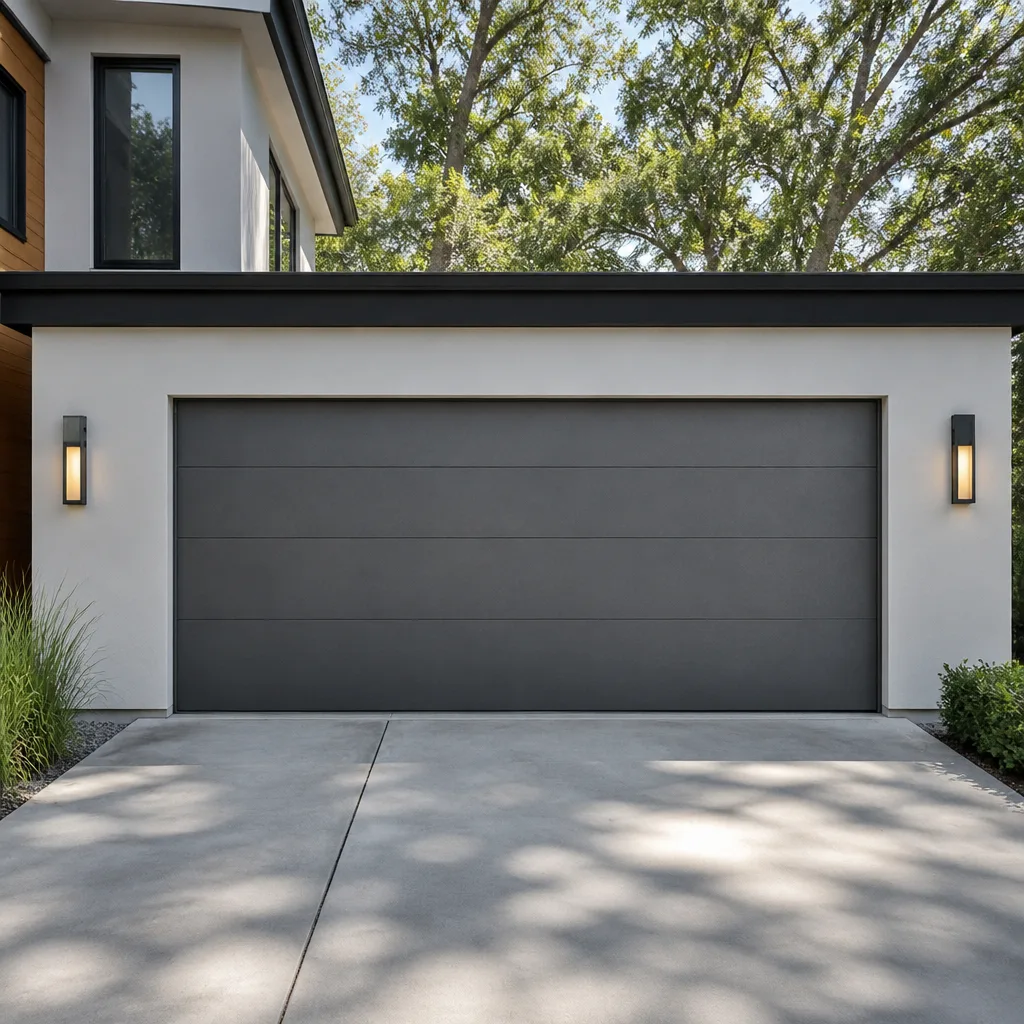 Modern flush
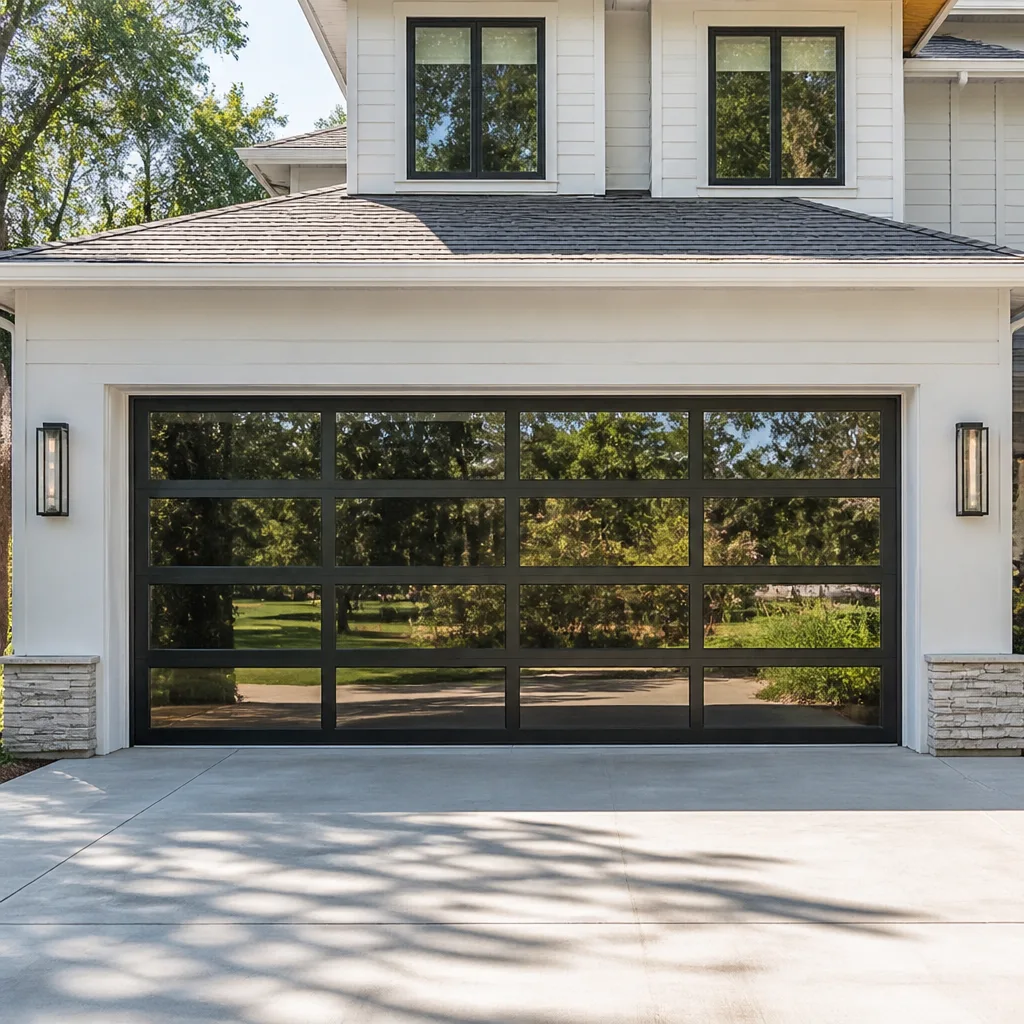 Full-view glass
 LiftMaster openers
 Chamberlain openers
Full 25-point door and opener safety check with every visit - springs, cables, rollers, tracks, and your LiftMaster or Chamberlain opener included
You get a price before we start. It does not change when the pro arrives.
Get your free estimateGarage Door Repair Maintenance Schedule: What to Do and When
The most common cause of a mid-summer garage door failure in St. George isn’t age or heavy use. It’s lubrication that felt fine in March and quietly thinned out once the afternoon highs pushed past 100°F. Metal that was gliding in spring starts grinding by July, and by August the door is loud, sluggish, or stuck. A garage door doesn’t need the same care in January as it does in August, and a generic quarterly checklist misses that entirely. This guide lays out a maintenance calendar built around St. George’s actual seasons, so you know what to check, when to check it, and when to stop and call a specialist.
Quick Answer
In St. George, a garage door needs lubrication every three to four months (more often in summer), a spring balance test monthly, a torque and hardware check each spring and fall, and a full professional inspection once a year. The work shifts with the season: heat strips lubricant and loosens fasteners in summer, while the big temperature swings between winter and summer stress springs year-round. Follow a seasonal calendar and most failures get caught before they strand you.
Styles & brands we work with
- Raised-panel steel
- Carriage house
- Modern flush
- Full-view glass
- LiftMaster openers
- Chamberlain openers
Table of Contents
- Why St. George Climate Changes Your Maintenance Calendar
- The Seasonal Maintenance Calendar for St. George
- Choosing the Right Lubricant for High-Desert Heat
- How to Test Spring Tension Safely (Without Tools)
- The Torque and Hardware Checks That Prevent Mid-Cycle Failures
- What a Professional Inspection Covers
- Keeping a Maintenance Log That Actually Helps
- Repair or Replace? Reading the Signals
Why St. George’s Climate Changes Your Maintenance Calendar
A garage door in St. George lives a harder life than the same door in a mild coastal city. The reason isn’t one extreme season; it’s the range. Summer afternoons routinely cross 105°F, and winter nights can drop into the 20s and 30s. That’s a swing of 60 to 80 degrees over a year, and every one of those swings makes the steel in your springs, hinges, and tracks expand and contract. A spring that’s correctly tensioned in January is slightly overstressed in July. A hinge bolt that’s snug in November is loose by June.
The local housing stock compounds it. Many St. George homes have garages facing west or southwest, which means the door soaks up direct afternoon sun for hours. That radiant heat bakes the lubricant on the rollers and hinges far faster than a shaded or north-facing door. If your garage faces the sun, plan on the shorter end of every maintenance interval in this guide.
Dust is the other local factor. Between the dry spring winds and the summer construction dust around growing neighborhoods, grit works its way into hinges and roller bearings. Grit plus thin lubricant equals accelerated wear. The calendar below accounts for all of this. It’s built for the St. George climate specifically, not a national average. Our technicians have up to 13 years of experience with garage doors here and across the region, and the pattern is consistent.
The Seasonal Maintenance Calendar for St. George
Here’s the month-by-month schedule we recommend for a St. George garage door. Treat it as a starting point and adjust for how much the door runs (a household that cycles it six times a day needs more attention than one that uses it twice).
Late Winter to Early Spring (February to March)
- Do a full visual inspection: look for frayed cables, bent tracks, worn rollers, and loose hinges.
- Wipe down old lubricant and reapply a high-temperature grease to hinges, rollers, and the torsion bar bearings.
- Run the spring balance test described below to establish a baseline before summer.
- Check and tighten all hinge and bracket bolts with the correct torque for your hardware.
- Test the safety reverse on the opener by placing an object in the door’s path.
- Wipe the safety sensor lenses clean of winter dust.
Late Spring (April to May)
- This is the ideal window for a professional annual inspection, before the heat sets in.
- Lubricate again, using a product rated for high heat.
- Inspect the weather seal along the bottom and sides; heat and dry air crack it.
- Listen for new sounds on open and close; note them for the log.
Summer (June to September)
- Lubricate once a month if your door faces the sun, otherwise every six weeks.
- Recheck hinge and bolt torque mid-summer; heat loosens fasteners.
- Watch for sluggish opening, which usually signals thinning lubricant or a fatiguing spring.
- Keep the tracks clear of dust and grit; wipe them, don’t grease them.
Fall (October to November)
- Clean and relubricate before the first cold snaps.
- Retorque all hardware; tighten what the summer loosened.
- Test the balance again and compare it to your spring baseline.
- Inspect the seal for cracks that will let cold air in over winter.
Winter (December to January)
- Cold mornings make springs more brittle; test balance more gently and listen closely.
- Check that the opener’s travel limits still close the door fully against the cold-stiffened seal.
- Clear any grit the winter winds blow into the tracks.
Choosing the Right Lubricant for High-Desert Heat
This is where the St. George summer separates good products from bad ones. The lube that protects metal-on-metal contact has to survive temperatures well past 100°F inside a sun-baked garage. Many common products simply don’t.
The biggest offender is WD-40 in its standard form. It’s a light penetrating oil, not a long-term lubricant. It sprays on thin, feels smooth for a week, then evaporates or migrates away, leaving the hinge drier than before. Above 90°F it breaks down even faster. If you’ve been using it as your go-to, that’s likely part of why the door gets loud in summer.
What holds up:
- White lithium grease – good for hinges and the torsion bar bearings, holds up reasonably in heat.
- Silicone spray – the right choice for rollers and the tracks, won’t attract dust the way grease does.
- Purpose-made garage door lubricant – formulated for high-temperature cycling; the safest default.
Avoid anything that stays tacky or attracts grit. In a dusty St. George summer, sticky grease on a roller becomes a grinding paste. Apply lubricant sparingly and wipe away excess. More isn’t better; the right product applied at the right interval is. If your door hardware came with a specific brand (a Clopay or Wayne Dalton door, for instance, may specify particular components), match the lubricant to the hardware rather than grabbing whatever’s on the shelf.
How to Test Spring Tension Safely (Without Tools)
A garage door’s springs carry enormous stored energy. This is the single most dangerous part of the system, and we want to be direct about that: never attempt to adjust, tighten, or replace a torsion or extension spring yourself. A spring under tension can cause serious injury if it releases unexpectedly. The test below is about observing whether the spring is holding, not about touching it.
Here’s the safe way to check whether your springs are still balanced:
- Close the door fully and disconnect it from the opener using the manual release cord. This puts the door on its springs alone.
- Lift the door halfway by hand and let go. It should stay where you left it, roughly balanced, without drifting down hard or springing up.
- If the door slams down or races up, the springs are out of balance or near the end of their life. Stop and call a professional.
- Open it fully by hand and note whether it requires more effort than it used to. A door that’s suddenly heavy is a sign of a fatiguing spring.
- Listen for a bang or snap that happens without the door moving. That’s usually a spring breaking, and it needs a professional visit.
Reconnect the opener only after you’ve finished and the door behaves normally. If the door won’t hold its position or feels heavier than it should, that’s your signal to book a garage door repair rather than keep forcing it. Springs near end of life give plenty of warning through the balance test, which is why doing it monthly is worth the two minutes.
The Torque and Hardware Checks That Prevent Mid-Cycle Failures
Most garage door failures that happen “out of nowhere” are actually loose hardware that finally let go. A hinge bolt backs out a quarter-turn at a time over months of vibration, until one day the roller pops out of its bracket and the door jams. In St. George, the summer heat accelerates this because metal expands and fasteners lose their grip faster in the swing between hot days and cool nights.
The hardware worth checking, and why it matters after a St. George summer:
- Hinge bolts – the most common mid-cycle failure point. Snug them with the correct torque; over-tightening strips the hole and creates a bigger problem.
- Roller brackets – check that each roller sits firmly in its bracket and spins freely. A seized roller drags on the track and stresses the opener.
- Track bolts – loose track bolts let the rails shift out of alignment, which makes the door bind.
- Opener mounting bolts – a vibrating opener loosens its own mounts over time.
- Center bearing plate – the plate that holds the torsion bar should be solid and free of play.
Torque specs vary by door and hardware brand. A Genie or LiftMaster opener assembly has different mounting requirements than a bare torsion system, and the tension and torque values for your specific door matter. That’s a big reason brand-matched expertise counts: knowing the quirks of the actual system installed beats a generic tightening pass. If you’re not sure of the spec for your hardware, a professional check is worth more than a guess with a wrench.
What a Professional Inspection Covers
Once a year, ideally in late spring before the St. George heat peaks, a professional inspection catches what a homeowner checklist can’t safely reach. We run through the full system, not just the visible parts.
- Cables and drums – checking for fraying, corrosion, and correct winding on the drums. Cables are a serious safety item and belong in trained hands.
- Springs – measuring tension and assessing remaining life against the door’s weight.
- Tracks and alignment – confirming the rails are plumb and true, with no bends that will bind the door.
- Rollers and hinges – replacing worn rollers before they seize and stress the opener.
- Opener – motor, logic board, travel limits, and safety reverse all tested. Opener faults get isolated and fixed rather than defaulting to a full replacement.
- Safety sensors and seals – confirming the sensors align and the weather seal still keeps dust and heat out.
An inspection is also where we catch the small stuff that turns into a big repair. A slightly worn roller is a few dollars; a seized roller can take out the opener. Catching it early is the whole point of the annual visit.
Keeping a Maintenance Log That Actually Helps
When you eventually call for service, a good maintenance history saves time and often money. The trick is keeping it simple enough that you’ll actually do it. A notebook or a note on your phone is plenty; the format matters more than the medium.
For each entry, note:
- The date and what the door was doing (any new sounds, sluggishness, or sticking).
- What you did (lubed, tightened, tested balance) and what product you used.
- The result of the balance test (held position, drifted, felt heavy).
- Any part that looked worn but that you didn’t replace.
Two things make a log genuinely useful to a technician. First, the trend matters more than any single entry: a balance test that held in March but drifts by July tells a story about a fatiguing spring. Second, naming the products and brands helps. If your door is an Amarr or Clopay unit with a specific opener, knowing that up front lets whoever services it arrive prepared with the right parts and specs. Hand that log to your technician and the diagnosis is faster and more accurate.
If you’d rather not keep the log yourself, an annual professional inspection effectively becomes your record. Either way, some history beats none.
Repair or Replace? Reading the Signals
Maintenance buys you time, but every door reaches a point where the decision shifts from repair to replacement. Knowing the signals keeps you from pouring money into a door that’s done, or replacing one that had years left.
Lean toward repair when:
- A single spring, roller, or hinge has failed on an otherwise solid door.
- The opener has a specific fault (motor, logic board, remote, safety sensor) that can be isolated and fixed.
- The door is structurally sound and the tracks are straight.
Lean toward replacement when:
- Multiple springs, cables, and rollers are all near end of life at once, and the door itself is worn through.
- The panels are dented or rusted to the point of affecting operation.
- You’ve had repeat failures in a short window on the same system.
The straight answer is usually available with a close look. We approach every door as a repair-first decision: exhaust the fix before recommending a new door. If you’re weighing the two, our full range of garage door repair options starts with a diagnosis, not a sales pitch. And if replacement is the right call, that’s the same team carrying you from a fix, to an opener repair, to a full installation when the door finally gives out.
Common Mistakes to Avoid
- Using WD-40 as a long-term lubricant. It’s a light penetrating oil, not a lasting protectant, and it breaks down quickly in St. George heat. Use a high-temperature grease or purpose-made garage door lube instead.
- Greasing the tracks. Tracks aren’t supposed to be lubricated; grease traps dust and grit and turns into grinding paste. Keep them clean and wipe them down; lube the rollers and hinges instead.
- Ignoring the spring balance test. It takes two minutes and gives the clearest early warning of a failing spring. Skipping it is how summer failures surprise people.
- Facing the summer without a mid-season hardware check. The heat between June and September loosens bolts faster than any other stretch of the year in St. George.
- Over-tightening bolts to “make sure.” Strip a hinge bolt and you’ve created a repair where there wasn’t one. Snug to spec, not to the point of stripping.
- Adjusting or replacing a spring yourself. Springs store dangerous energy. Leave them to a trained technician; the risk isn’t worth it.
- Skipping the annual inspection because the door “still works.” Working isn’t the same as healthy. Annual inspections catch small wear before it becomes a stranding failure.
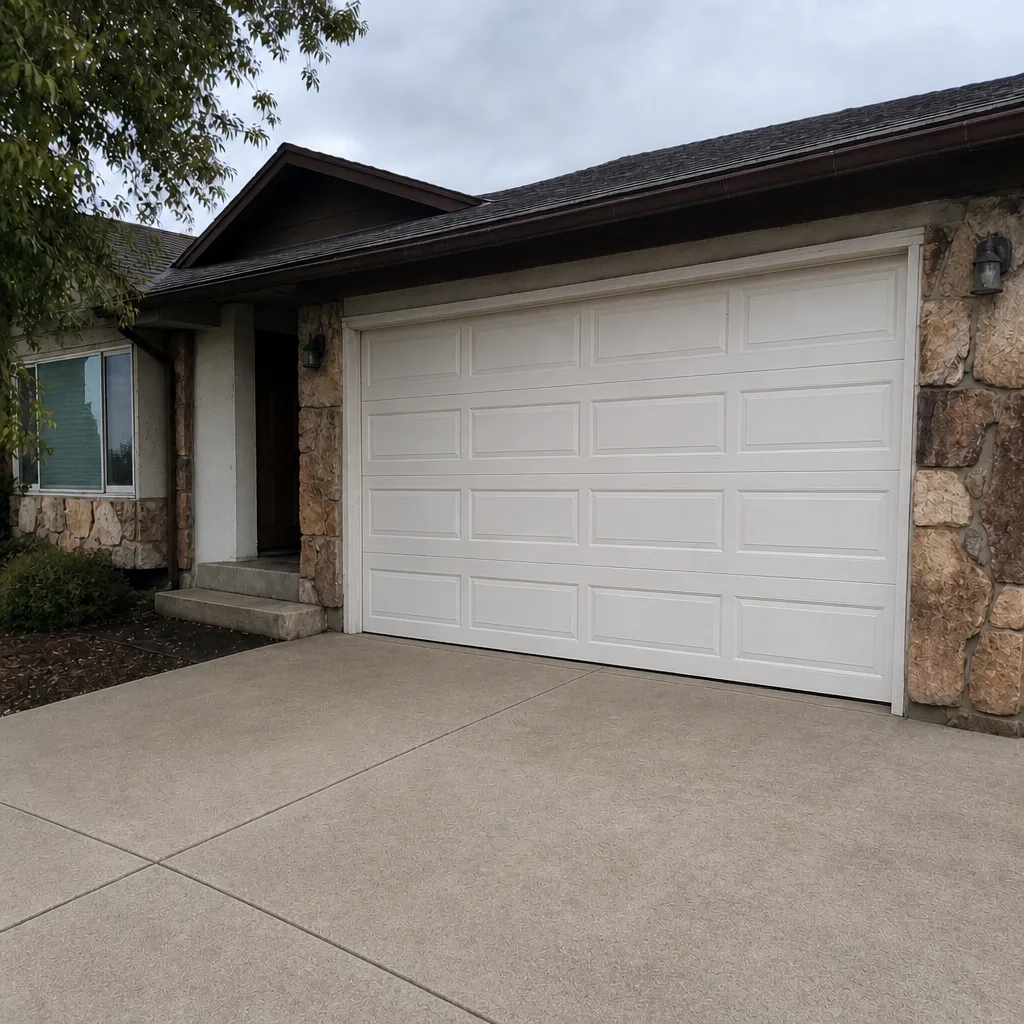
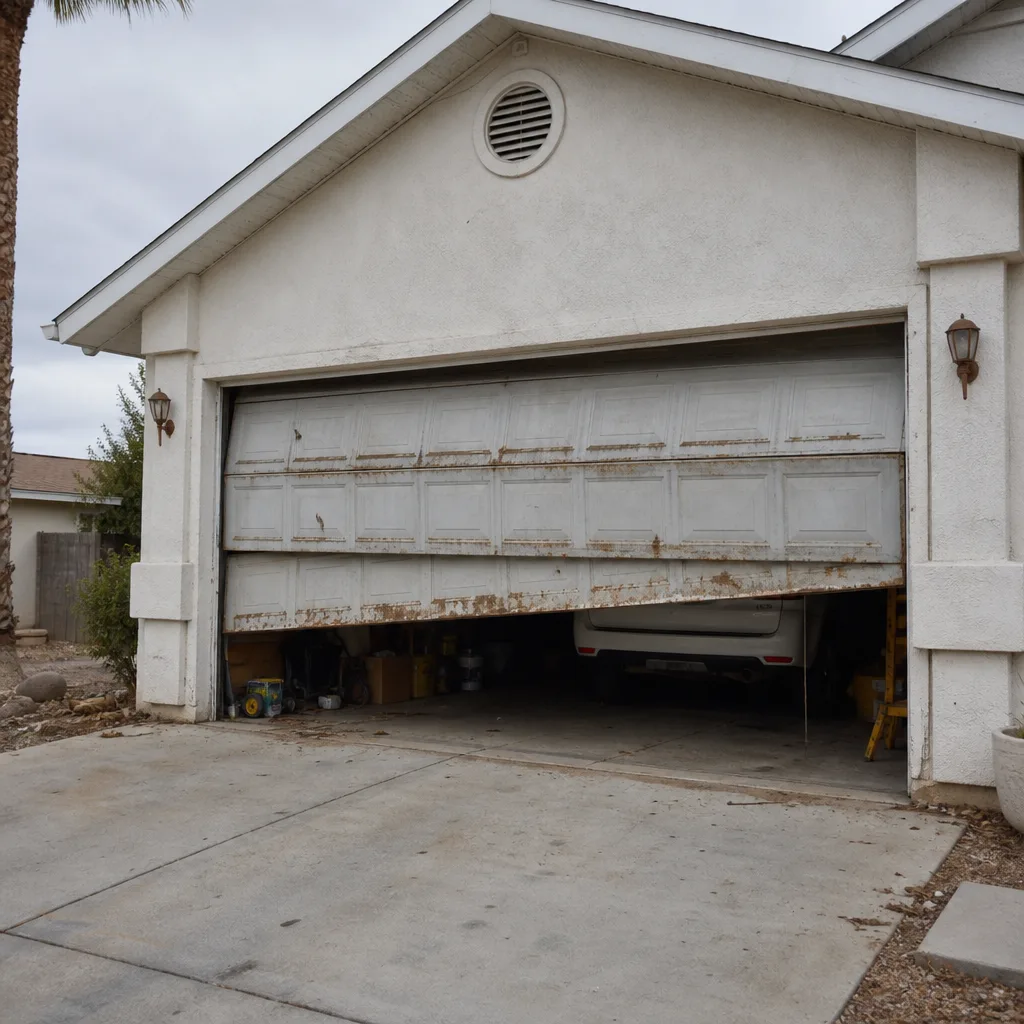
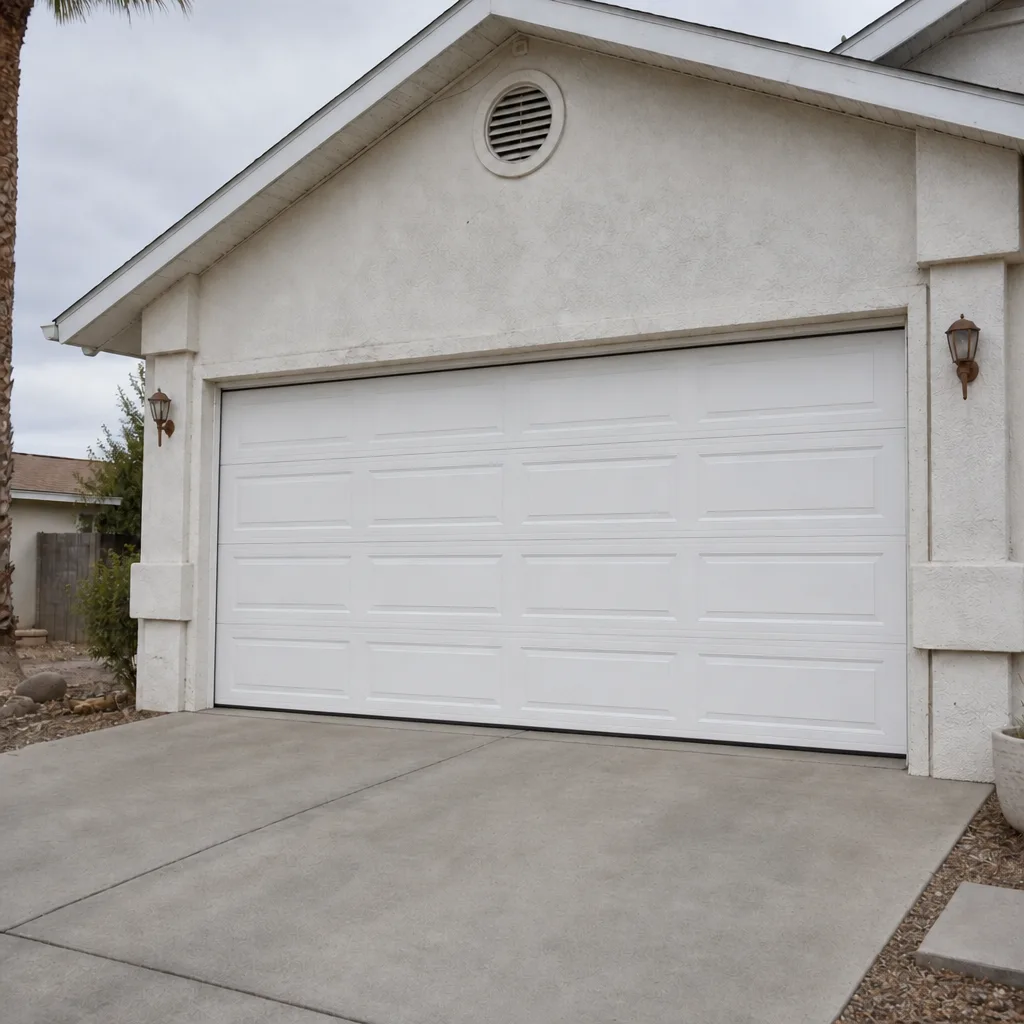
See the difference
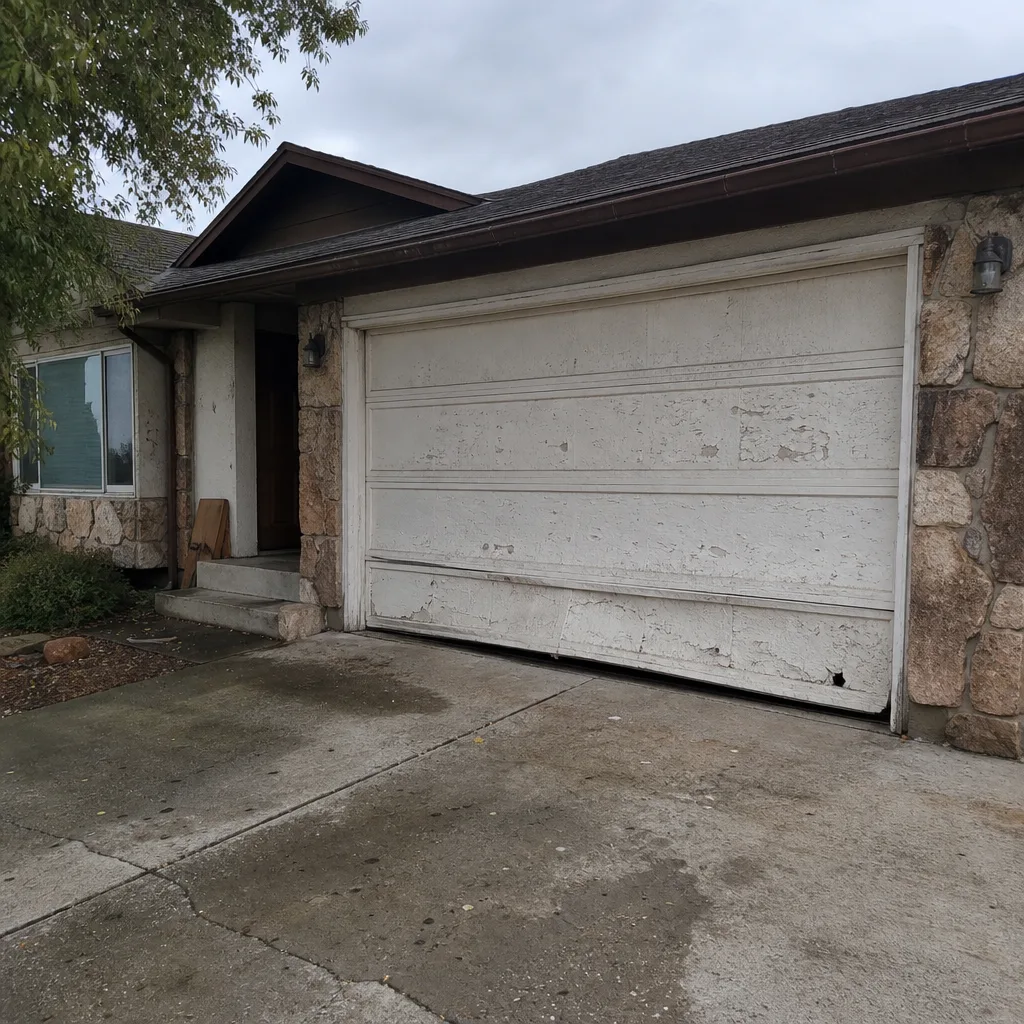 Before
 After
 Before
 After
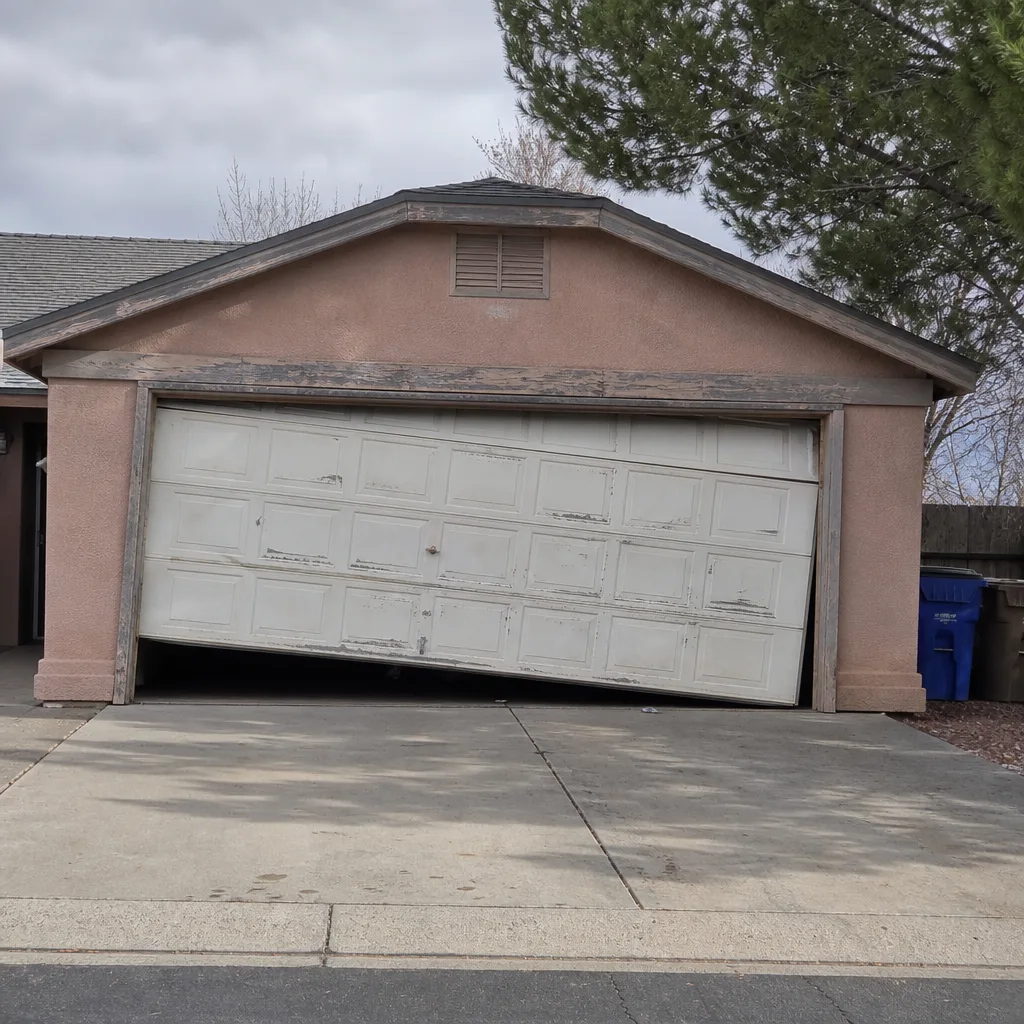 Before
 After
When to Call a Professional
Some jobs are fine to handle yourself: wiping down tracks, applying lubricant, watching for new sounds. But certain scenarios need a trained technician, full stop. If a spring snaps or the door feels suddenly heavy, if a cable looks frayed or unwound, if the door jams or comes off its tracks, or if the opener starts behaving unpredictably (motor faults, logic board issues, safety sensors that won’t align), stop trying to fix it and call. Garage doors are heavy and their springs store serious energy, so the dangerous parts belong in professional hands. The same goes for a door that’s making new noises or drifting in the balance test. Rosemont Garage Door Service offers free estimates in St. George; call (866) 389-3687 for a diagnosis before a small problem becomes an urgent one. We answer 24/7. Fast dispatch from 7am to 7pm, Sunday through Friday.
Frequently Asked Questions
Every three to four months in most of St. George, and once a month during summer if your door faces the sun. The heat breaks down lubricant faster than in milder climates, and a sun-baked west-facing door dries out quickest. Use a high-temperature grease or purpose-made garage door lubricant, not WD-40.
You can safely test whether the springs are balanced by hand, but you should never adjust or replace them yourself. Disconnect the opener, lift the door halfway, and let go; it should hold its position. If it slams down or races up, call a professional. Springs store dangerous energy.
Heat thins lubricant and expands metal, so contact points that glided in spring start grinding by July. Loose hardware and dry rollers are usually the cause. A summer relube and a torque check on hinges and bolts quiet most doors down considerably.
The balance test is the simplest signal. A door that no longer holds its halfway position, feels heavier to lift by hand, or produces a bang without moving usually has a fatiguing or broken spring. Note the date each test in your log so you can watch the trend.
A yearly inspection catches wear you can’t safely reach, like cables, drums, and spring tension. Late spring, before the St. George heat sets in, is the ideal window. It’s the most reliable way to catch a failing component before it strands you.
The home checklist covers lubrication, basic cleaning, the balance test, and visual checks. A professional visit handles the dangerous parts (springs, cables, drums, spring tension) plus a full opener and track checkout. The two work together; the checklist keeps small things from growing, and the annual visit catches what you can’t inspect from the ground.
Call a garage door specialist who can diagnose the actual system on your door. Rosemont Garage Door Service works on major brands including Genie, Clopay, Amarr, and Wayne Dalton, which means the tension and torque specs match your specific hardware. Call (866) 389-3687 for a free estimate.
The Bottom Line
Your garage door doesn’t need a national-average maintenance plan; it needs one built around St. George’s real seasons. Lubricate every three to four months (monthly in summer for a sun-facing door), test the spring balance every month, retorque hardware each spring and fall, and book a professional annual inspection in late spring. Use a high-temperature grease or garage door lube, not WD-40, and keep a simple log of balance tests and hardware checks so a technician has useful history when you need one. Handle the safe tasks yourself, leave the springs and cables to a trained specialist, and most mid-summer failures never happen. Start with a free estimate in St. George; call (866) 389-3687. We answer 24/7. Fast dispatch from 7am to 7pm, Sunday through Friday.
For a dedicated, single-trade approach to every part of your door, from a snapped spring to a full new installation, see Rosemont Garage Door Service. If you’re in the area and want local scheduling, visit our St. George page to get started.
Written by the team at Rosemont Garage Door Service.