
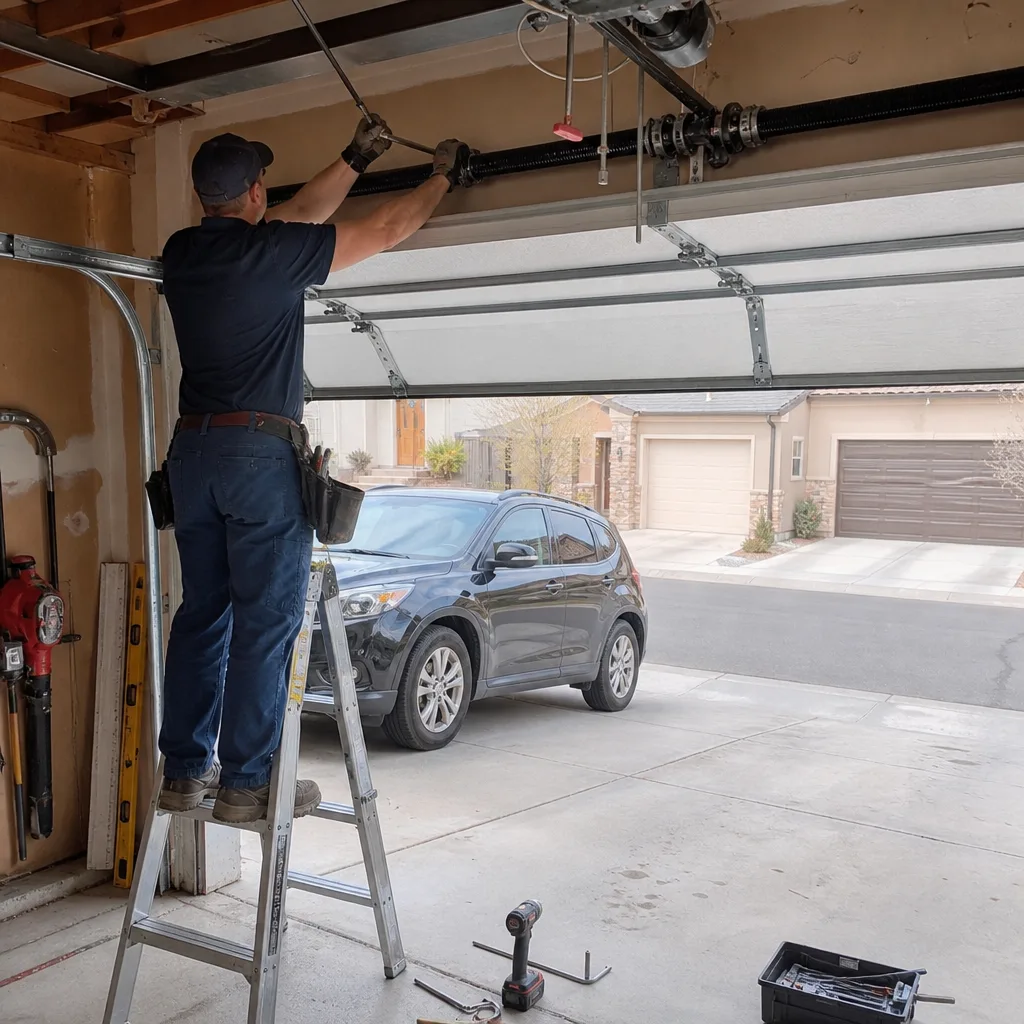
Last updated November 16, 2026
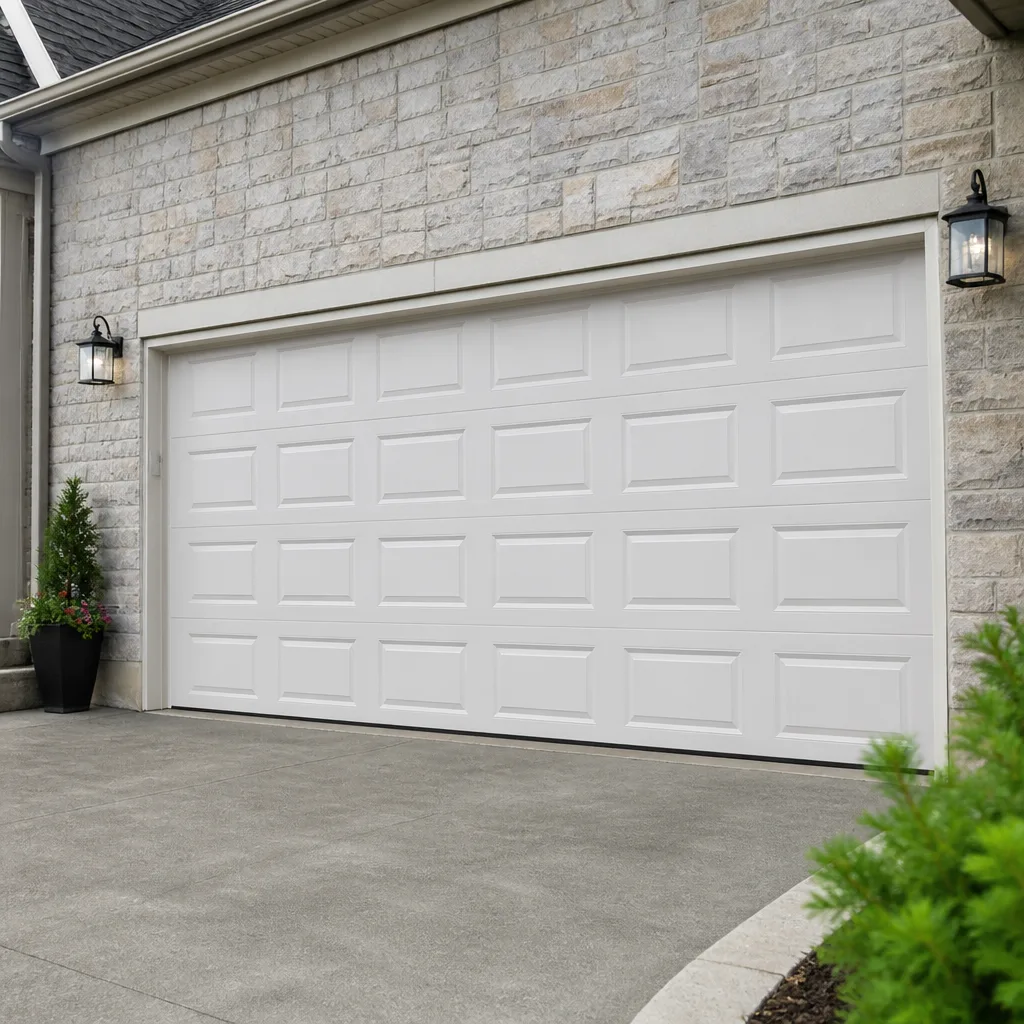 Raised-panel steel
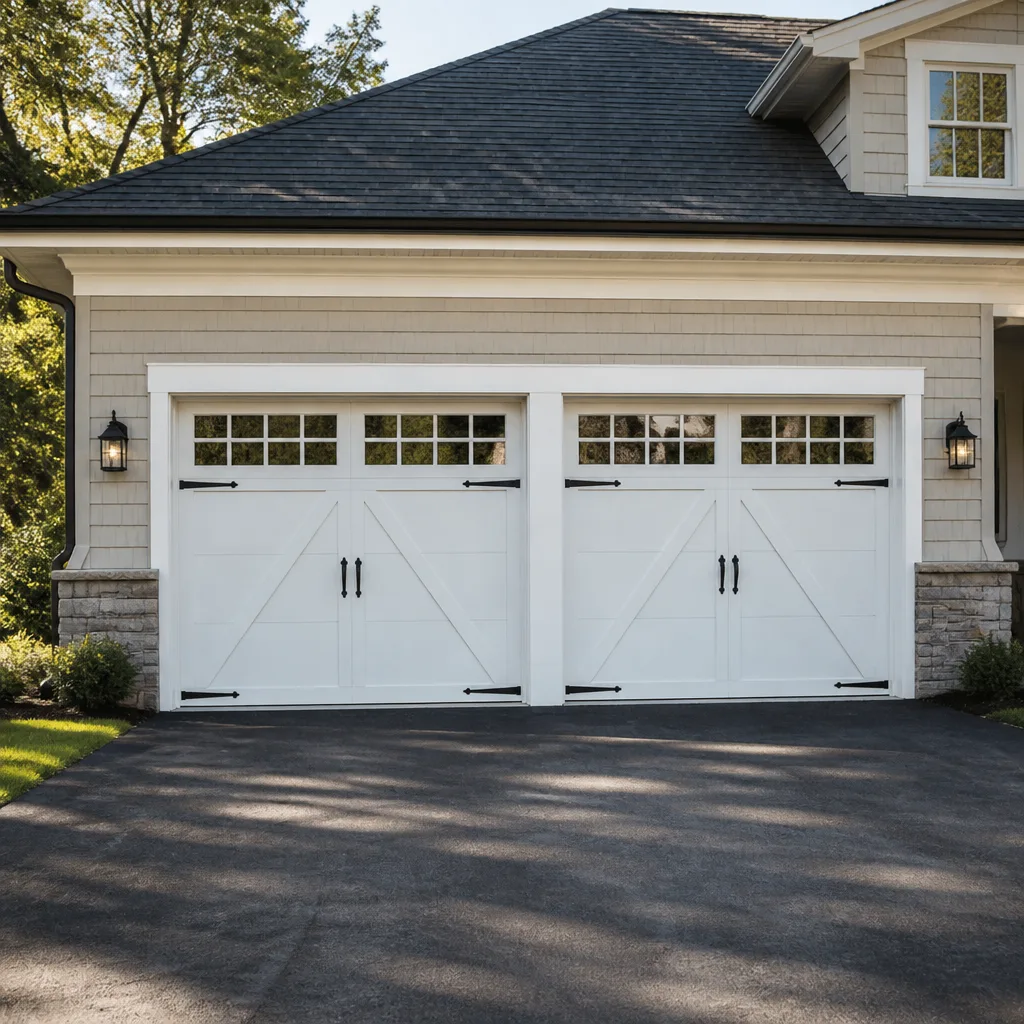 Carriage house
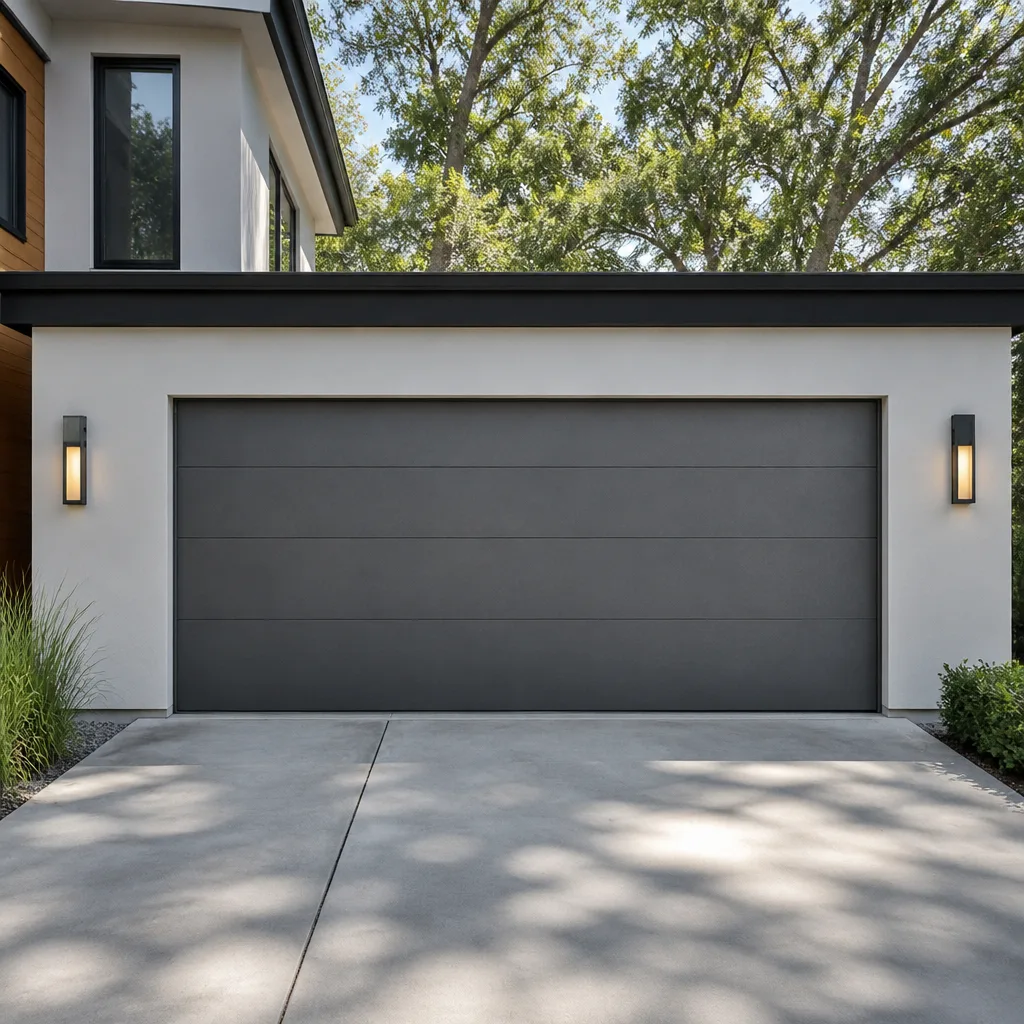 Modern flush
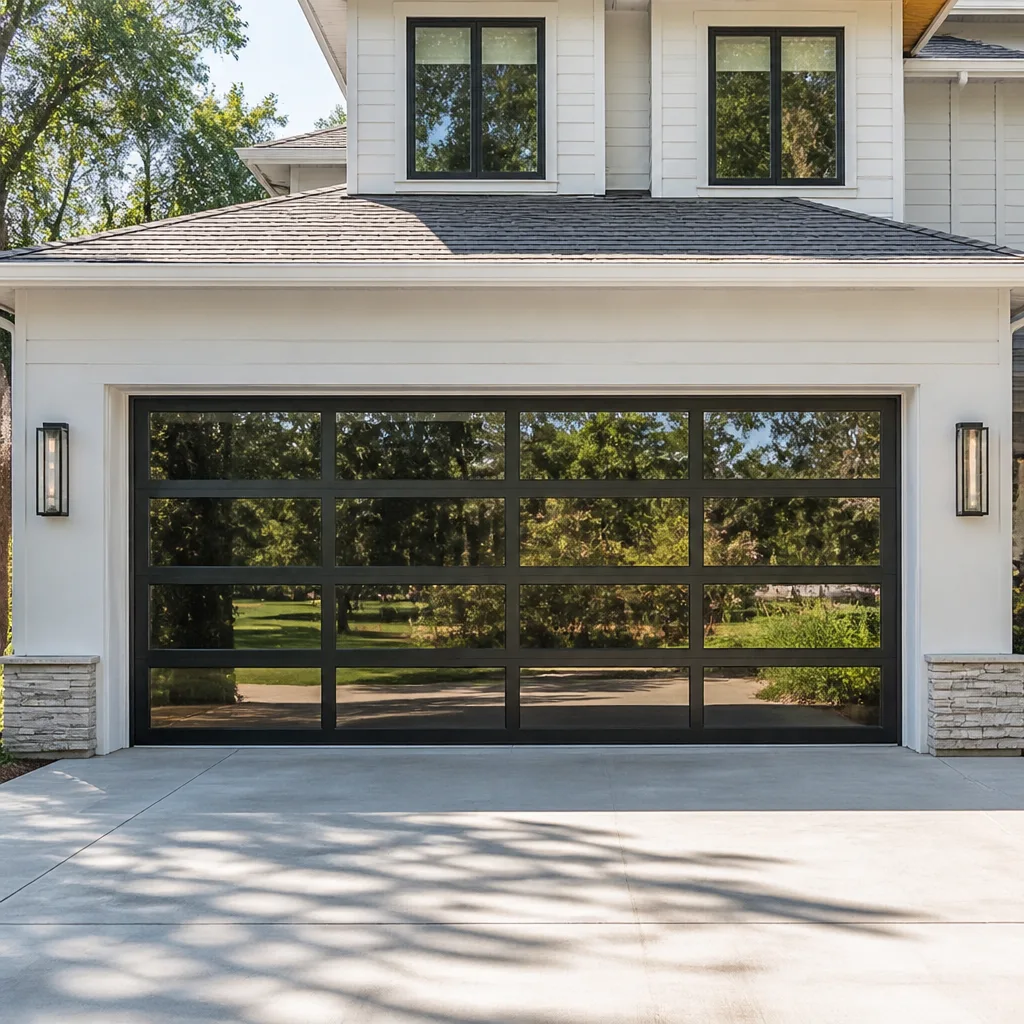 Full-view glass
 LiftMaster openers
 Chamberlain openers
Full 25-point door and opener safety check with every visit - springs, cables, rollers, tracks, and your LiftMaster or Chamberlain opener included
You get a price before we start. It does not change when the pro arrives.
Get your free estimateDIY vs Professional Garage Door: The St. George Homeowner’s Decision Guide
Torsion springs store enough energy to cause serious injury or death when released the wrong way. That’s not a line from a service company trying to sell you something; it’s the reason spring adjustment is classified as a hazardous task. So the honest answer to “can I fix this myself?” depends entirely on which “this” you’re asking about. Some garage door work is genuinely within reach for a capable homeowner. Some of it can hurt you badly. This guide draws the line clearly for St. George homeowners, task by task.
Quick Answer
You can safely handle sensor alignment, lubrication, remote programming, and minor cosmetic repairs yourself. Spring replacement, cable work, and track realignment need a trained technician, full stop. Everything in between depends on the task and your comfort with the tooling.
Styles & brands we work with
- Raised-panel steel
- Carriage house
- Modern flush
- Full-view glass
- LiftMaster openers
- Chamberlain openers
Table of Contents
- What makes a garage door task dangerous?
- What can you safely do yourself?
- Which tasks demand a professional?
- Why does St. George’s climate change the DIY risk?
- How does the hybrid approach affect your bill?
- What goes wrong with big-box opener kits?
- What happens if a DIY repair fails?
- When is repair the right call versus replacement?
What makes a garage door task dangerous?
A garage door looks like a simple slab of panels. Underneath, it’s a tensioned mechanical system with a spring holding hundreds of pounds of load. A torsion spring at rest carries enough stored energy that losing control of one can break bones or worse. That’s the whole reason to treat this differently from, say, swapping a light fixture.
The spring is the headline risk. Cables are the second. A snapped cable under load can whip with real force, and the sharp steel end can cut deep. Track work is safer but still involves lifting a door that weighs far more than it appears to, and getting a roller out of a bent track under tension requires knowing where the pressure will release.
We’ve trained on this equipment for up to 13 years of hands-on work, and the honest truth is that the professional tooling matters as much as the experience. Winding bars, cable clamps, and proper tension gauges exist for a reason: the job can’t be done safely without them.
The reverse is also true. Sensors, lubrication, and remote programming carry almost no risk. Knowing the split is the key decision, and it’s what the rest of this guide walks through.
What can you safely do yourself?
Plenty of routine maintenance and small fixes are well within a homeowner’s reach. Here’s the list that we’d tell any St. George homeowner they can take on without hesitation.
- Safety sensor alignment. If the door reverses or refuses to close, the sensors near the floor on either side are the first place to look. Straighten them, clean the lens, and check that the LED on each unit is solid, not blinking.
- Lubrication. Hinges, rollers, and the pivot points benefit from a garage-door-rated lubricant. Spray it in, work the door up and down a couple of times, and wipe off excess.
- Remote and keypad programming. Pairing a new remote to a LiftMaster, Chamberlain, or Genie opener is a five-minute job if you follow the instruction sheet. Most wall-mounted openers have a learn button that makes this straightforward.
- Panel dent repair. Cosmetic dents on a steel panel can sometimes be pushed out from behind. It won’t be perfect, but it’s a low-risk improvement.
- Weatherstripping replacement. The rubber seal along the bottom of the door is replaceable, and it wears quickly in St. George heat.
- Visual inspection. Look at the springs, cables, rollers, and hinges once a season. Note what you see. You’re not fixing anything in this step, just spotting what needs a professional’s eye.
If any of these steps goes past what you’re comfortable doing, that’s fine. None of them are emergencies, and a routine visit for garage door repair can fold them into a bigger tune-up.
Which tasks demand a professional?
The line between DIY and professional isn’t about skill. It’s about the consequence of a mistake, and on this side of the line, a mistake can be serious.
- Torsion spring replacement. Non-negotiable. A torsion spring holds the full weight of the door. Releasing one without the correct winding bars and technique can cause severe injury. This is the single task where “maybe I can figure it out” is the wrong instinct.
- Extension spring replacement. Same story. Extension springs run along the horizontal tracks above the door and carry equivalent force.
- Cable replacement. A cable under tension is a hazard even when it looks slack. Cutting one loose in a residential garage is how serious injuries happen.
- Track realignment. A bent vertical or horizontal track can’t just be eyeballed straight. The door has to come off the track, the track has to be measured against the frame, and re-set with the door back on it. That’s a two-person job with real lift risk.
- Panel replacement. Replacing a lower panel on a sectional door means unloading the springs, removing the old panel, and re-tensioning the system. Skipping the tension step damages the new panel and can leave the door unbalanced.
- Opener motor or logic board failure. A dead opener isn’t always a dead opener. Confirming whether the motor, logic board, travel limit settings, or safety sensors are the cause takes diagnostic work. garage door opener repair is a skill in itself, not a “replace the whole unit” default.
Any of these starting to go wrong at 7 a.m.? Call Rosemont Garage Door Service. We answer 24/7. Fast dispatch from 7am to 7pm, Sunday through Friday.
Why does St. George’s climate change the DIY risk?
St. George is a high-desert town. Summer temperatures regularly climb past 100°F, and the sun hits west- and south-facing garage doors for hours every afternoon. That’s an unusual environment for a mechanical system, and it changes the risk math on a home inspection.
The biggest issue is cable jackets. Garage door cables are typically coated steel. In St. George’s UV exposure, that coating degrades long before the steel fails, and it does so in a way that leaves the cable looking intact from the outside. A cable that reads “fine” during a visual check can be structurally compromised on the inside, with broken wires hiding under the jacket’s cracked outer layer.
That’s why the “just look at it” method of garage door inspection falls apart in St. George. A homeowner who’s mentally comparing their cable to one on a YouTube video from a humid climate is comparing apples to oranges. The desert ages rubber and coatings differently. It also accelerates wear on the bottom weatherstripping and on the hinges, and it tends to dry out the bearings around the rollers.
If you’re inspecting under the impression that “it still looks okay,” add a rule: don’t trust the visual alone. Look for kinks, fraying at the cable ends, and any exposed wire near the drum. If anything looks wrong, that’s the point to stop and call. Our technicians, who’ve seen this pattern for up to 13 years, can confirm whether a cable is safe or not.
How does the hybrid approach affect your bill?
Here’s a practical idea most guides skip: you don’t have to choose between all-DIY and all-professional. Some homeowners save meaningful money by doing the prep themselves and hiring out the specialist task.
What “prep” means depends on the job. If you’re replacing an opener, for example, removing the old unit and clearing workspace around the door is a reasonable task for a careful homeowner. It shortens the billable labor time on the professional side and gets the technician straight to the installation work.
Prep tasks you can consider taking on:
- Moving vehicles and clearing the garage floor.
- Removing shelves, hooks, or storage near the door’s path.
- Unscrewing and removing a failed old opener (after confirming the door is fully closed and the door is not attached to the opener).
- Confirming the garage door opener circuit is switched off at the panel before anyone touches the electrical.
- Having the model number and a photo of the existing opener ready so the technician knows what’s coming.
Prep tasks you should leave alone:
- Anything involving the springs, cables, or drums.
- Any work on the electrical panel or wiring.
- Adjusting the tension on the door.
The trade-off is worth running through before you commit. A free written estimate from a specialist will break down the labor and material. If your prep work trims an hour off the job, that’s an hour you don’t pay for. But if the prep work goes wrong, it can turn a straightforward repair into a bigger job. Only take on the prep you’re confident about.
What goes wrong with big-box opener kits?
Big-box garage door opener kits are engineered for a standard residential door. That usually means a 7-foot door of standard weight. St. George’s newer builds often run heavier than that, and it isn’t a manufacturing defect in the kit; it’s a mismatch between what the kit assumes about your door and what’s actually installed.
Insulated doors are common in this climate for good reason. The garage gets hot, and insulation keeps that heat out of the house. But an insulated door can weigh noticeably more than the basic door the box kit was designed for. A lift rating that works fine on a basic steel panel can struggle to move a heavier insulated door through a full cycle. What follows is the classic pattern: the opener works for a few weeks, then starts overheating, reversing, or failing to complete the full travel.
The travel limit settings are another common issue. They have to be set correctly for the specific door’s weight and height. Kits that ship with a factory setting don’t know your door, and if the top limit is wrong, the door runs too far up into the header, or the bottom limit is wrong, the door closes with the wrong pressure on the seal. Neither is visible from the driveway, and both shorten the opener’s life.
Brand matters too. A Raynor or LiftMaster opener is engineered with its own travel limits and safety reverse behavior. Getting that setup right is what Rosemont is factory-familiar with across eight major brands, including Chamberlain and Genie, and it’s the reason a professional install often outlasts a box kit install. If your opener is dead and the box-install route is tempting, get a professional quote first and compare. The difference in outcome can be significant.
What happens if a DIY repair fails?
If a DIY spring repair fails and causes property damage or injury, the answer depends on your homeowner’s policy. Most policies exclude faulty workmanship by the homeowner, and a claim that stems from “I tried to fix this myself” can be denied or contested. In the worst case, a serious injury adds a medical cost on top of the repair you were trying to avoid paying for.
Here’s the plain version: a homeowner insurance policy protects against accidents that happen to you. It typically doesn’t cover the results of a repair you undertook and got wrong. That’s the liability question every homeowner should answer before picking up the winding bars. The money saved on a pro repair disappears fast if a claim gets denied and a new door, a car, or a medical bill lands on you.
For the tasks on the safe list above, this rarely comes up. Sensor alignment and lubrication aren’t going to cause a claim. But for springs, cables, and tension work, professional involvement protects you in two ways: the work is done correctly, and if something does go wrong, the professional’s liability coverage is on the line, not yours. That’s a real difference, worth factoring into any DIY decision.
When is repair the right call versus replacement?
Most of the time, repair wins. Springs, cables, rollers, and openers are all replaceable or serviceable individually, and there’s no reason to swap a full door for a failed spring. What matters is knowing when a repair is the right answer versus when a door has genuinely reached end of life.
Signs that repair is the right call:
- One component has failed (a spring, a cable, an opener).
- The door panels are intact and the door runs level when it moves.
- The door is under 15 years old and cosmetically fine.
Signs that replacement is worth considering:
- Multiple panels are dented or rusted badly.
- The door is sagging or running out of balance even after adjustment.
- You’re replacing a failing opener on a door that’s also near end of life, and the total cost of both jobs approaches a replacement.
That last point matters in St. George, where a lot of homes built in the 2000s are hitting the point where the door and the opener are both due. Our advice in that case is to get a free written estimate for a full quote before committing to a repair on the old door. A specialist who handles the repair, opener upgrade, and full installation under one company is going to give you a straighter answer than one who only does one of the three. Call (866) 389-3687 for that estimate. We answer 24/7.
Common Mistakes to Avoid
- Trying to release a spring “just to see.” Never. A tensioned spring without winding bars is a loaded gun. Call a professional before you touch it.
- Trusting a cable that looks fine. St. George’s UV exposure degrades cable jackets without warning. Look for kinks and frayed ends rather than relying on the outer surface.
- Cutting a tensioned cable. Even a slack-looking cable that’s still attached to the drum can whip when freed. This is not a job for bolt cutters in a home garage.
- Installing a box-kit opener on an insulated door without checking the lift rating. St. George’s insulated doors can be heavier than the kit expects. Match the opener’s rating to the door or the opener will burn out.
- Adjusting travel limits to “make it close.” If the door won’t close all the way, that’s a symptom of a bigger alignment issue, not something to fix with the limit screws.
- Skipping annual lubrication because “it still runs.” Dry hinges and rollers wear faster and eventually cause the door to bind and the opener to strain.
- Filing an insurance claim after a DIY mistake without reading the policy first. Homeowner policies commonly exclude faulty workmanship. Check before you file.
- Leaving a door propped open on a failed spring. A broken spring leaves the door unbalanced and heavy. The safer move is to leave the door closed and call for a repair visit rather than force it.
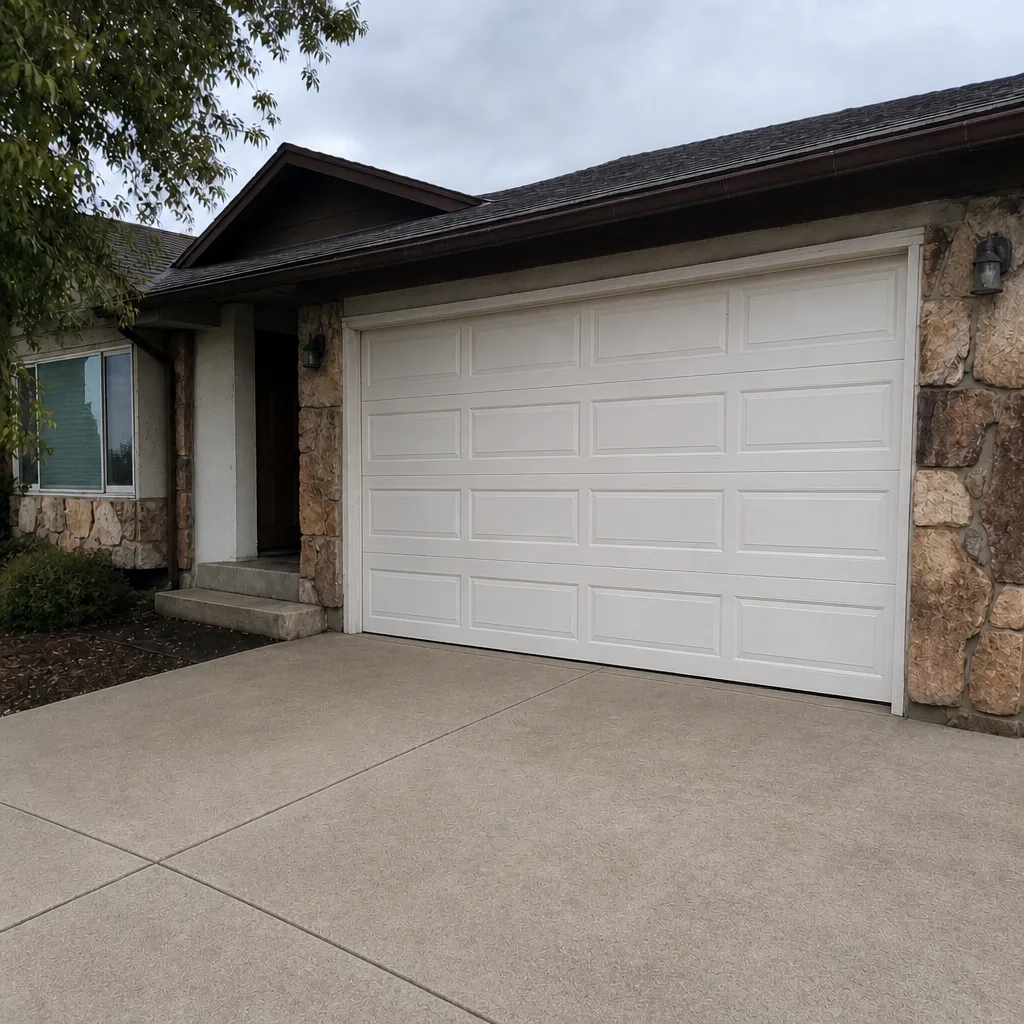
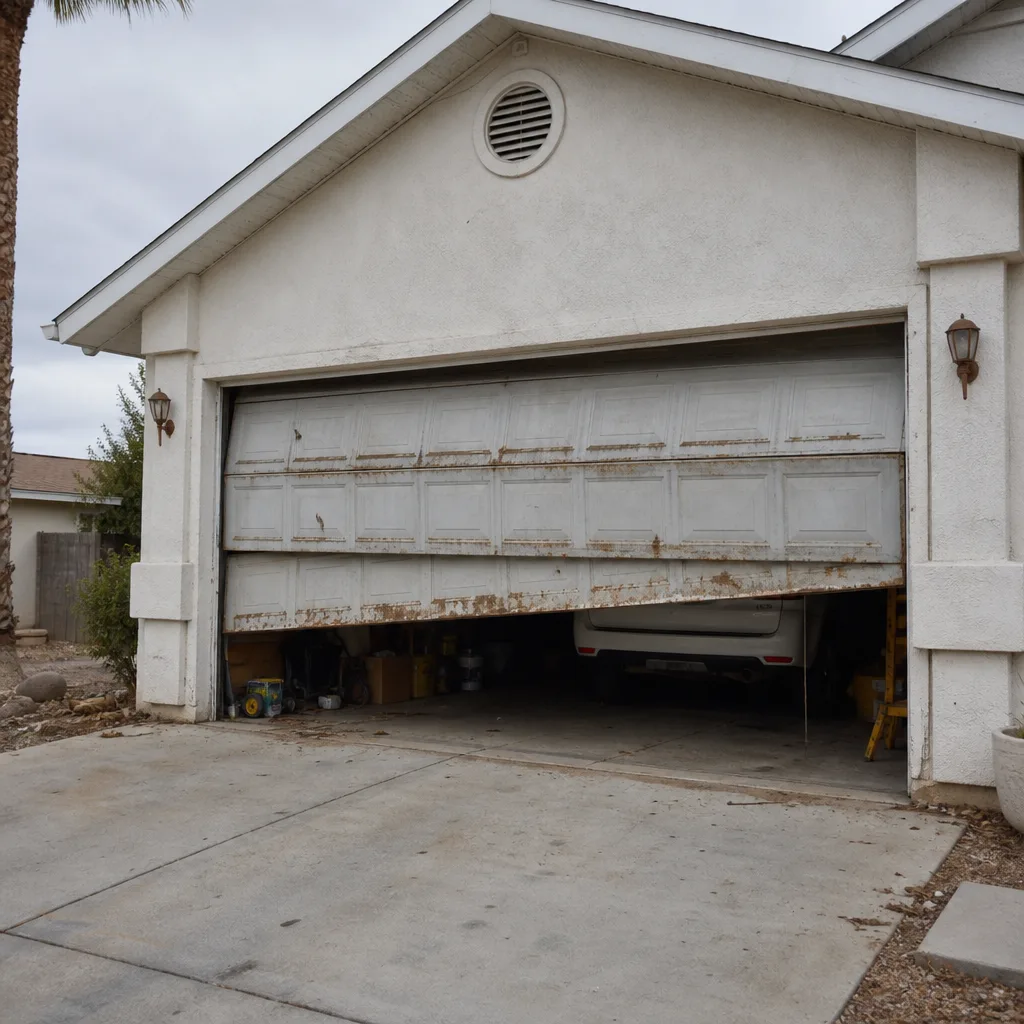
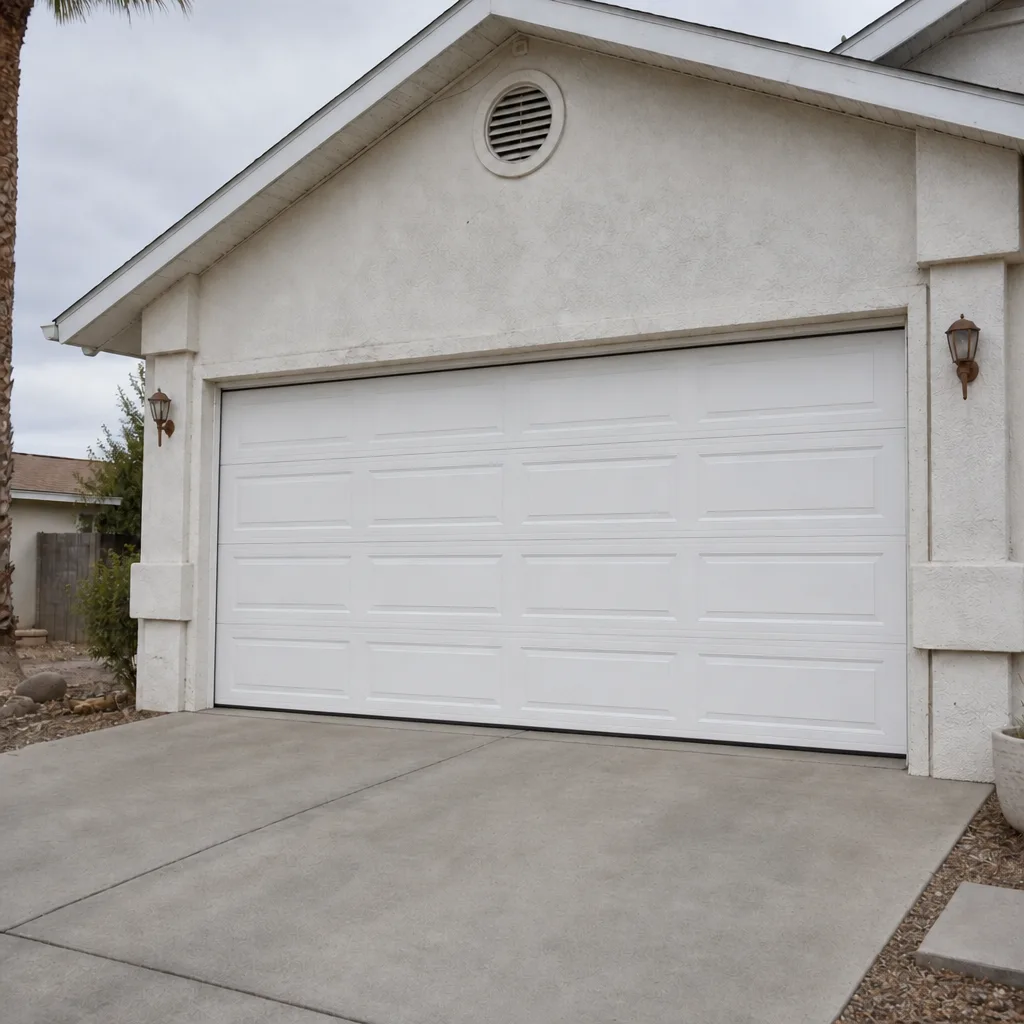
See the difference
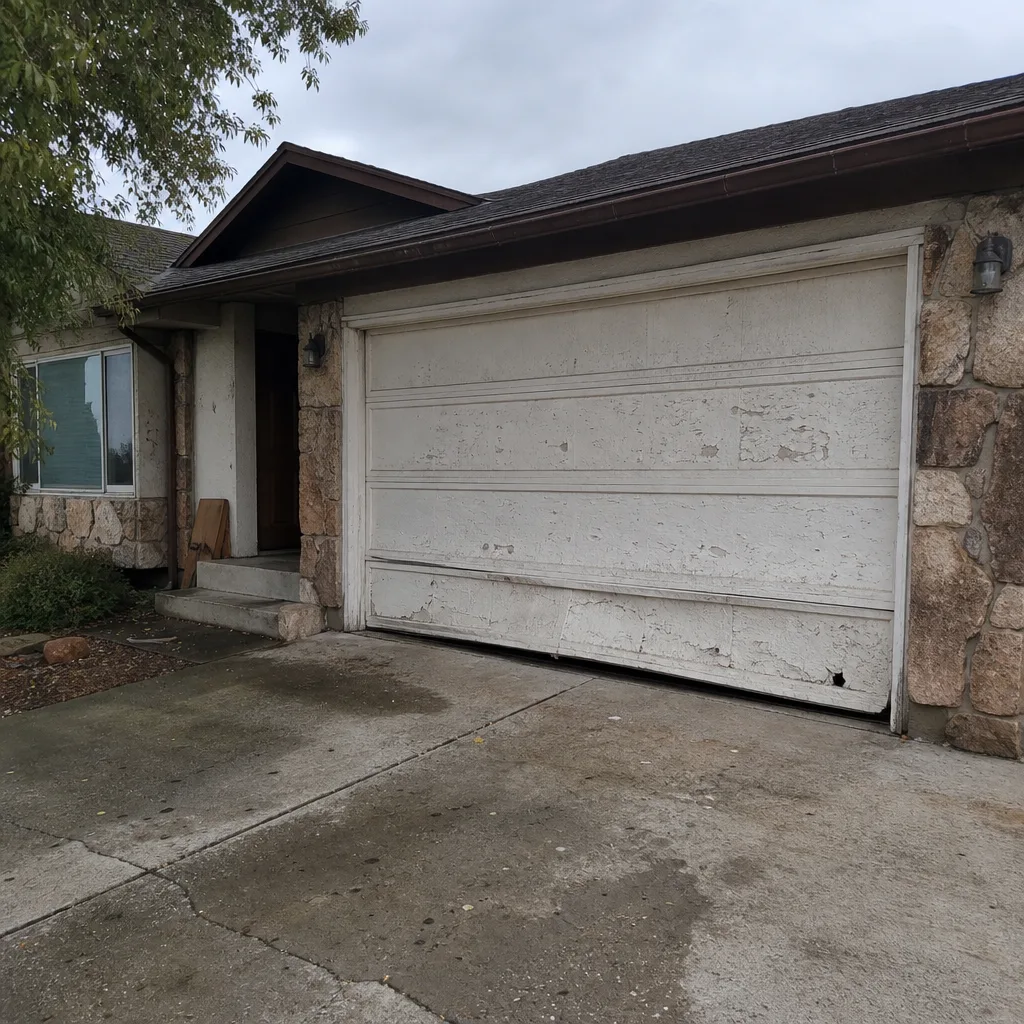 Before
 After
 Before
 After
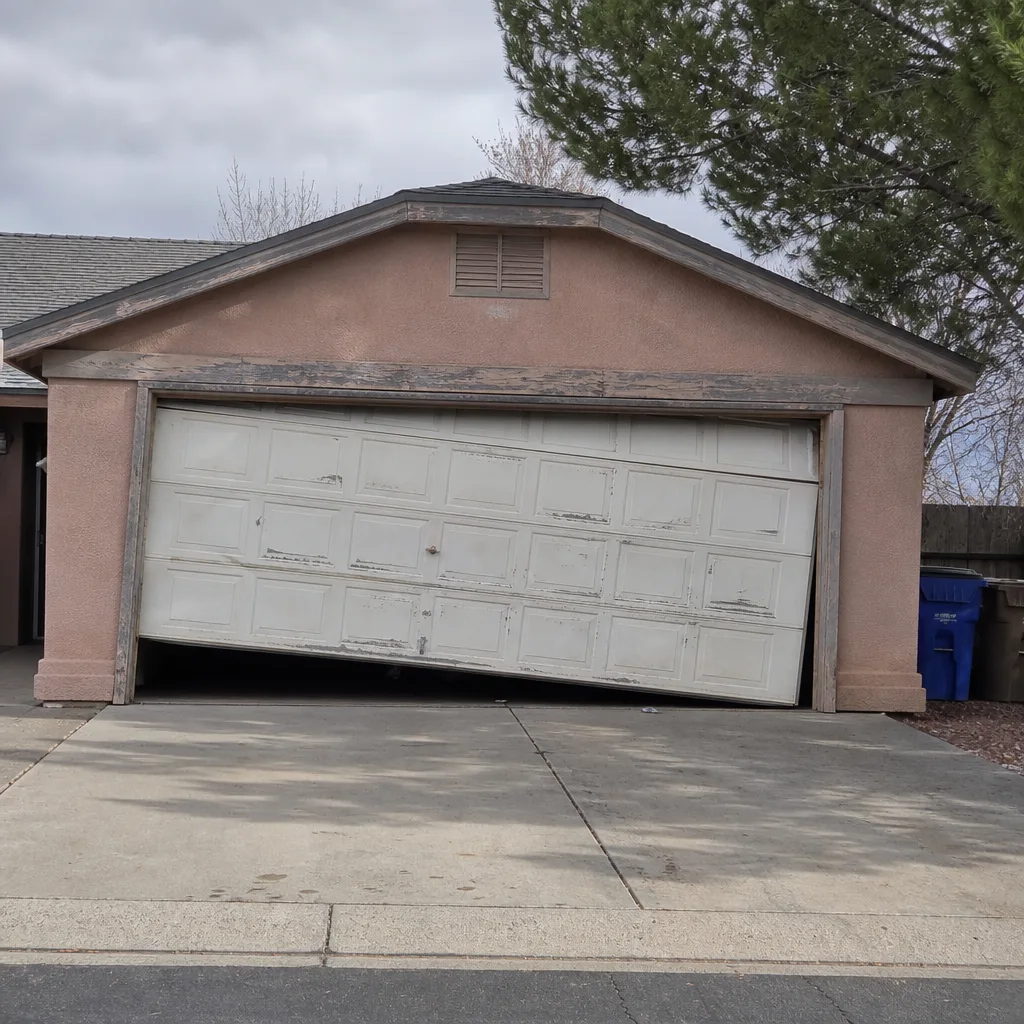 Before
 After
When to Call a Professional
Call a professional when the task involves a spring, a cable, a track, or a panel. Call when the door won’t open evenly, when the opener reverses on its own, when the door hangs halfway up, or when you hear a loud snap from the ceiling. Call when the door is heavy enough that you can’t easily lift it, because that’s a sign the springs have lost tension. And call when you’re not sure, because the “come look at it” visit is free. Rosemont Garage Door Service offers free estimates in St. George, and the price is quoted and agreed before any work starts. Call (866) 389-3687. We answer 24/7. Fast dispatch from 7am to 7pm, Sunday through Friday.
Frequently Asked Questions
No. Spring replacement requires professional winding bars and tension-control technique, and releasing a torsion spring incorrectly can cause severe injury or death. This is the one task where even experienced DIYers should call in a licensed technician.
It depends on the job, but every estimate we give is free and confirmed in writing before any work starts. A single-spring replacement, a cable swap, and opener diagnostics are all different jobs. Call (866) 389-3687 for an exact quote on your specific situation – estimates are free.
Sometimes, but the lift rating has to match the door’s weight. St. George’s insulated doors can exceed the weight the average box kit was designed for, and an undersized opener burns out or reverses mid-cycle. Have a technician confirm the rating before you buy.
Yes, same-day service is available when we have capacity. Call (866) 389-3687. We answer 24/7. Fast dispatch from 7am to 7pm, Sunday through Friday. A call outside dispatch hours is booked into the next opening, Sunday through Friday, 7am to 7pm.
Usually not. Most homeowner policies exclude faulty workmanship by the owner, so a claim that stems from a DIY repair can be denied or contested. That’s part of why spring work is worth handing to a professional.
Yes. Our technicians are state-licensed and insured, and they carry up to 13 years of hands-on experience with the brands we service, including LiftMaster, Chamberlain, Genie, and Raynor. Call (866) 389-3687 to book an estimate.
No. The written estimate sets the final price, and the price is quoted and agreed before any work starts. If we find something that changes the scope, we tell you and you decide before we proceed.
Sensor alignment, lubrication, remote programming, panel dent repair, and bottom-weatherstripping replacement are safe for a careful homeowner. Look up a photo of your opener model and follow the manufacturer’s programming steps, and keep the door in its fully closed position whenever you’re inspecting anything above head height.
The Bottom Line
The DIY question on a garage door isn’t about how handy you are. It’s about which tasks carry real physical danger and which don’t. Sensors, lubrication, remote programming, and weatherstripping are yours to take on. Springs, cables, tracks, and panels belong with a specialist, especially in St. George’s UV-heavy climate where aged cables can hide serious problems. Do the prep work if you want to save on labor; skip the risk work entirely. When the answer isn’t obvious, call (866) 389-3687 for a free estimate. We answer 24/7. Fast dispatch from 7am to 7pm, Sunday through Friday.
Written by the team at Rosemont Garage Door Service.