
Last updated November 16, 2026
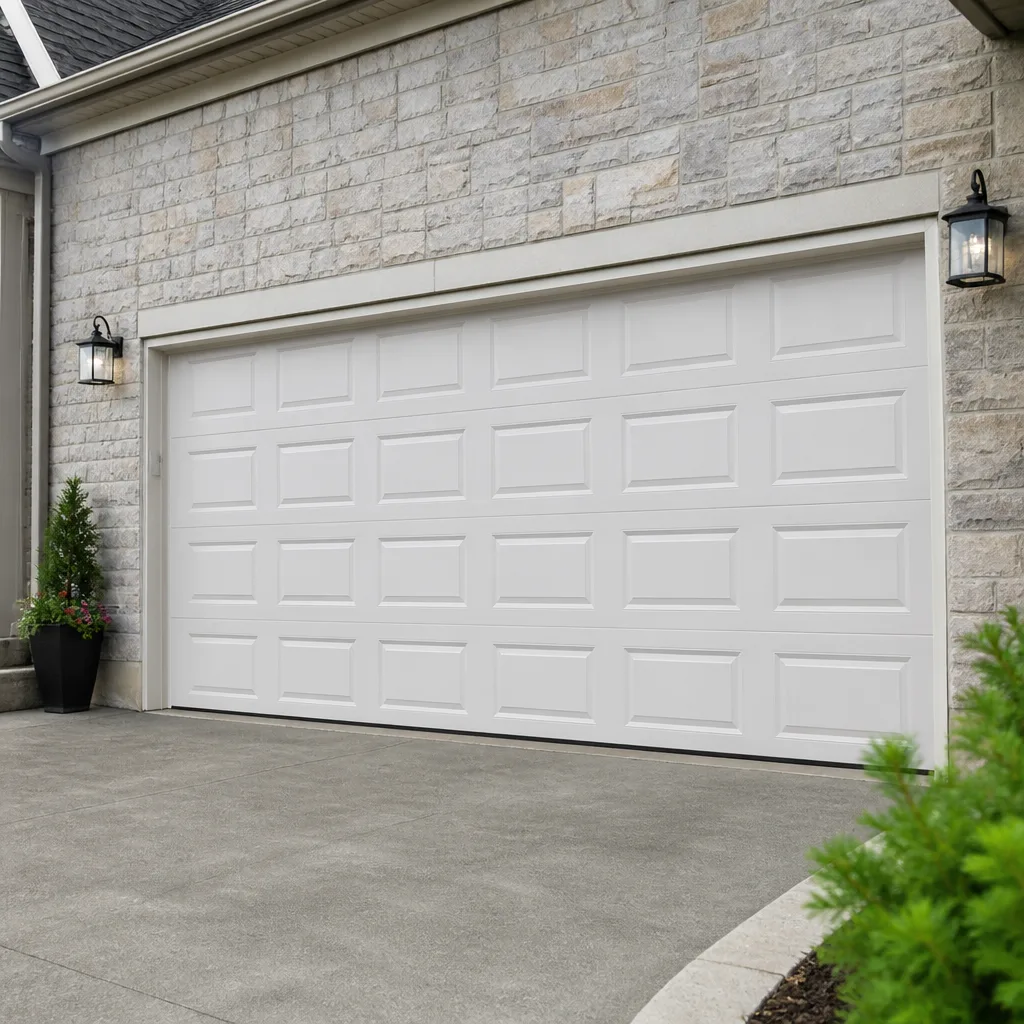 Raised-panel steel
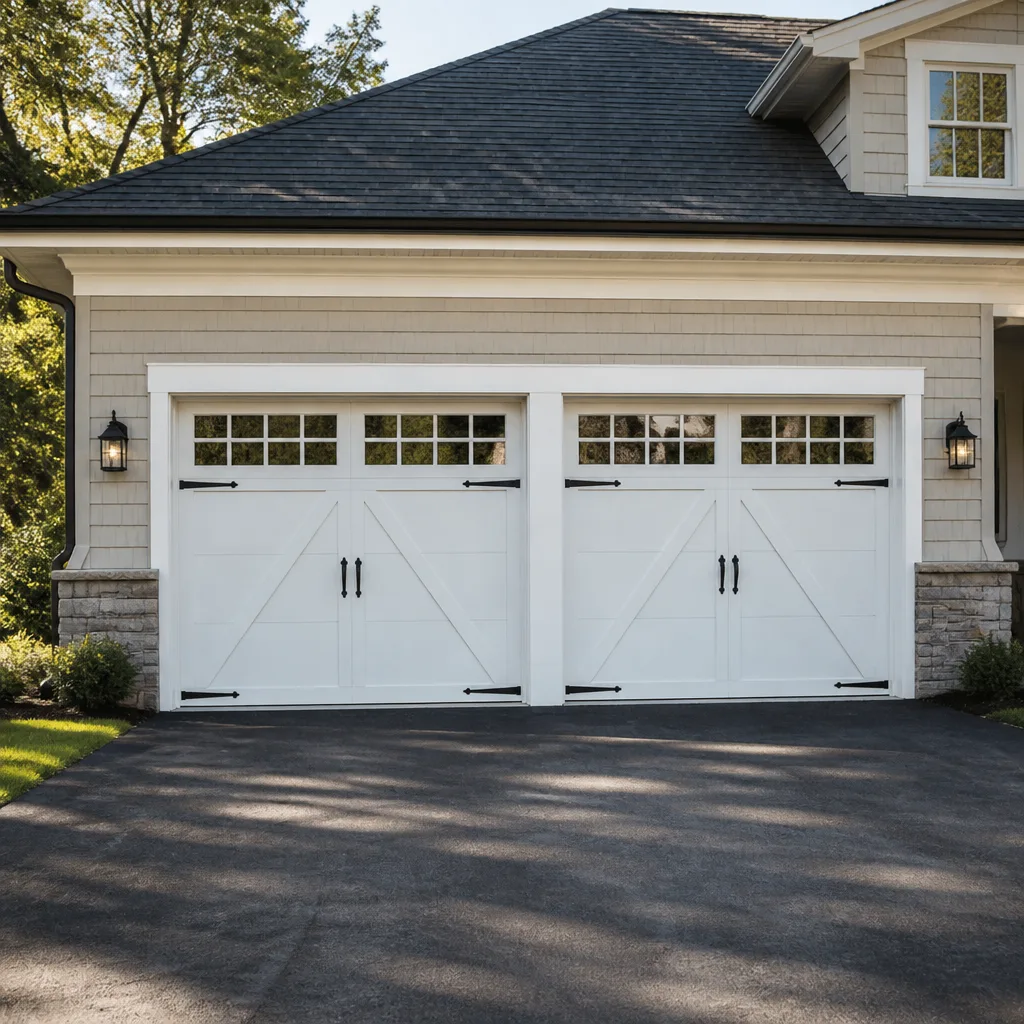 Carriage house
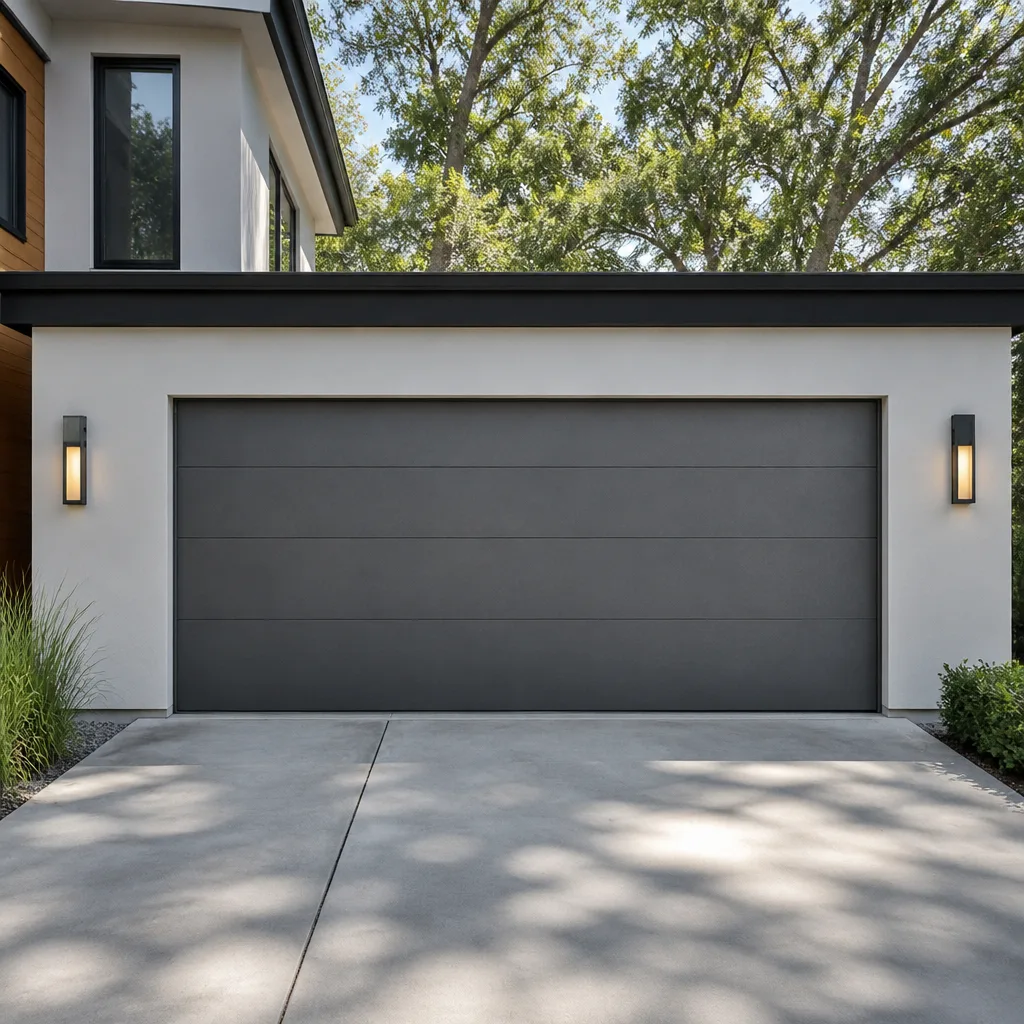 Modern flush
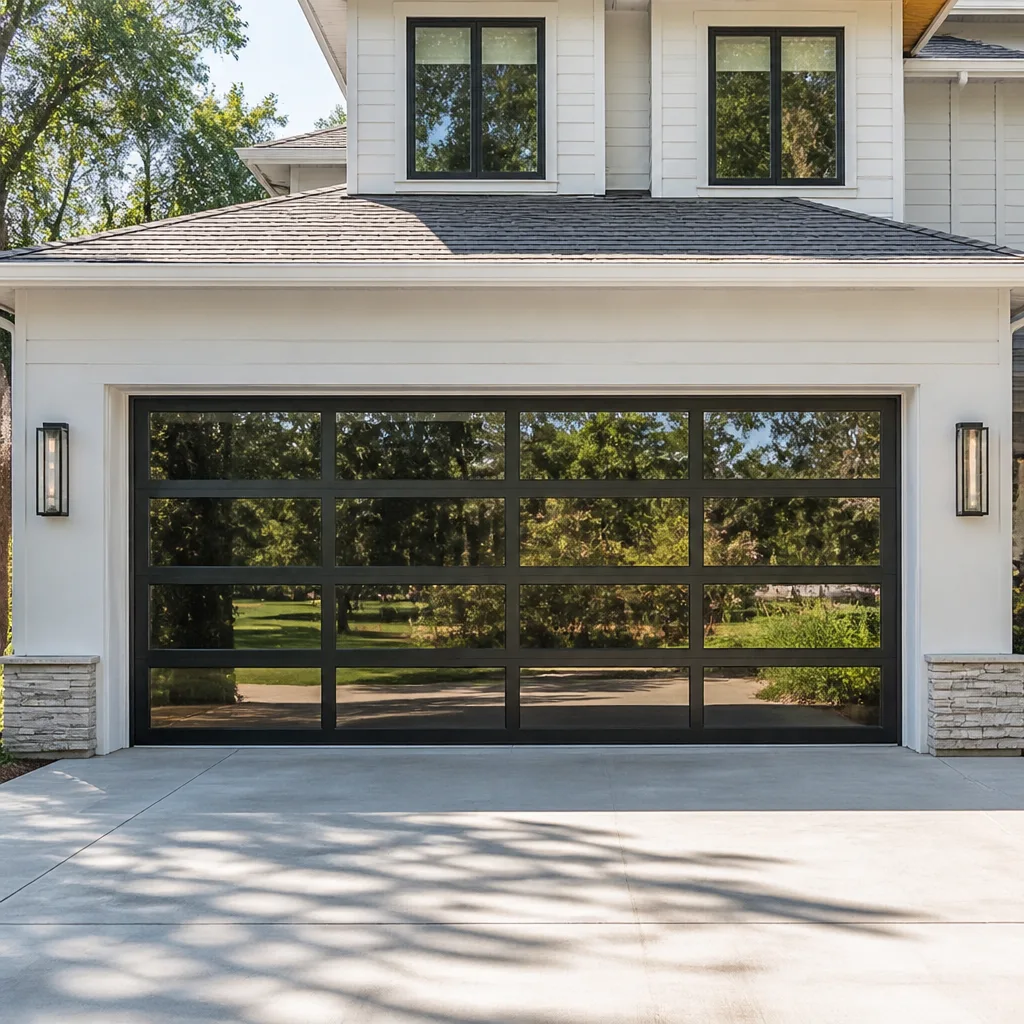 Full-view glass
 LiftMaster openers
 Chamberlain openers
Full 25-point door and opener safety check with every visit - springs, cables, rollers, tracks, and your LiftMaster or Chamberlain opener included
You get a price before we start. It does not change when the pro arrives.
Get your free estimateHow to Hire a Garage Door Contractor in St. George: A Step-by-Step Guide
Most homeowners in St. George hire a garage door contractor the same way they pick a restaurant: they call the first name that pops up and hope for the best. That’s the mistake. The bigger risk isn’t paying too much. It’s hiring a general handyman or an HVAC company that treats garage doors as a side job, then finding out later that the warranty is worthless because the parts came from a distributor the manufacturer doesn’t recognize. This guide walks you through what to ask, what to check, and what a legitimate estimate looks like, so the door you depend on every day gets fixed right the first time.
Quick Answer
To hire a garage door contractor in St. George, verify three things before you book: that the company specializes in garage doors rather than treating them as a side service, that technicians are factory-familiar with the brand already installed on your home, and that you get a written line-item estimate before any work begins. Specialists who work only on doors carry the right parts, the correct tension specs, and a labor warranty that actually holds up. Ask those questions up front and most of the risk disappears.
Styles & brands we work with
- Raised-panel steel
- Carriage house
- Modern flush
- Full-view glass
- LiftMaster openers
- Chamberlain openers
Table of Contents
- Why a Garage Door Specialist Beats a Generalist
- Licensing and Liability in Utah: What Applies to Garage Door Work
- The Brand Authorization Question Most Homeowners Skip
- How to Read a Written Estimate Line by Line
- Why Same-Day Availability Is a Weak Signal of Quality
- Markup Shops vs. Flat-Rate Specialists: Who Costs Less
- The 7-Step Hiring Process, Start to Finish
- St. George Specifics: Heat, Dust, and Housing Stock
Why a Garage Door Specialist Beats a Generalist
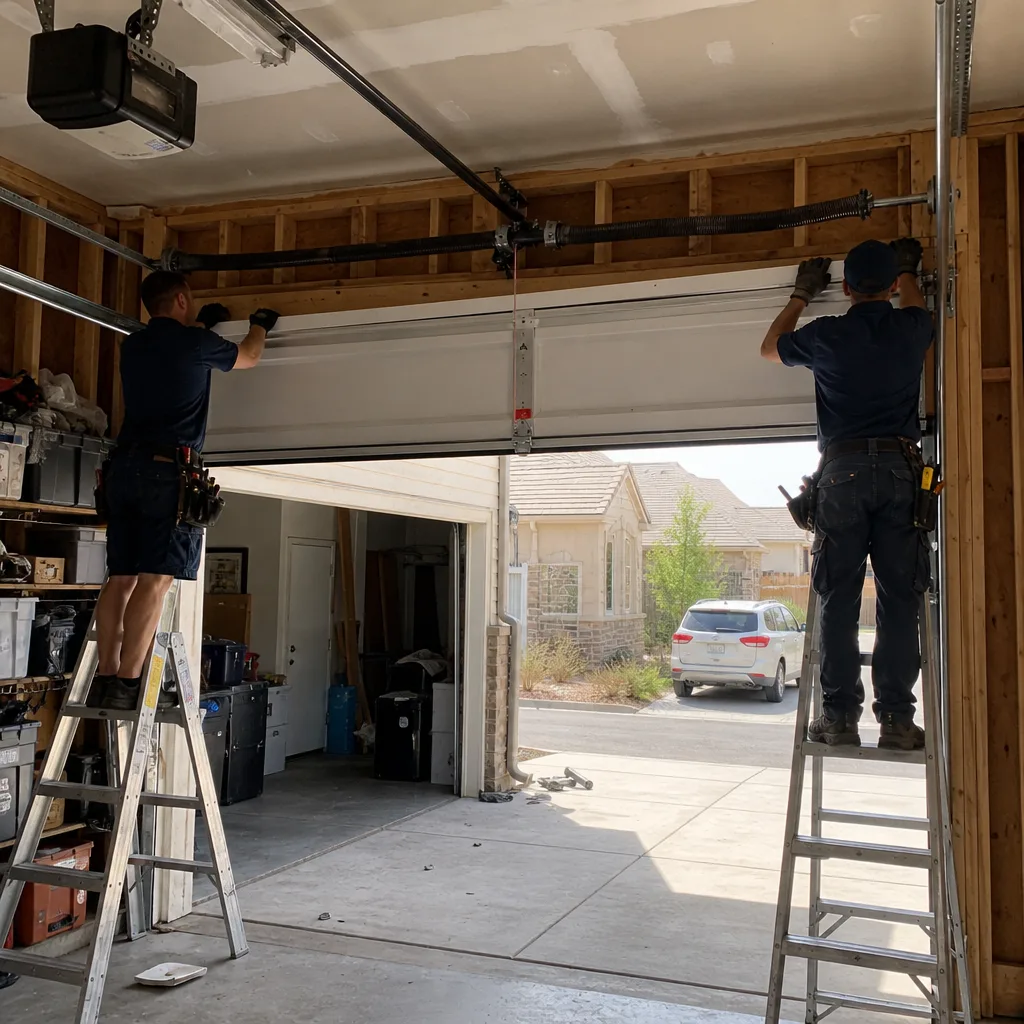
A garage door is a counterbalanced mechanical system under heavy spring tension. Every adjustment you make to one part changes the load on another: the springs, cables, drums, hinges, and opener logic all work as a single unit. A contractor who spends most of the week on plumbing and roofing doesn’t tune that system often enough to feel when something is off, and that’s where repeat failures start.
At Rosemont Garage Door Service, garage doors are the only trade we handle. No HVAC, no plumbing, no roofing. Every hour of training, every part on hand, and every diagnostic habit goes into one specialty. That’s the distinction to look for in St. George, where a quick search returns pest control companies, home-services apps, and general contractors alongside actual door specialists.
Here’s what specialization buys you in practice:
- Familiarity across the major brands. We work on LiftMaster, Chamberlain, Genie, Clopay, Amarr, Wayne Dalton, Craftsman, and Raynor equipment. A specialist knows the quirks of each one instead of learning your system on the clock.
- Opener repair as its own discipline. A generalist tends to recommend a whole new unit because diagnosing a logic board, safety sensor, or travel limit setting takes time they’d rather not spend.
- One company through the life of the door. Repair today, an opener upgrade when it makes sense, and a full installation when the door reaches end of life – without handing you off to a different contractor at each stage.
- Correct torque and tension specs. Brand-matched knowledge means the door goes back to the settings the manufacturer designed for, which cuts down on callbacks.
When you interview a contractor, ask directly: what percentage of your work is garage doors? If the answer is vague, keep looking.
Licensing and Liability in Utah: What Applies to Garage Door Work
Utah licenses contractors through the Division of Professional Licensing, and those licenses are classified by the type of construction work performed. Garage door repair and installation is generally treated as a specialty trade, but whether a given job falls under a specific license classification depends on the scope – a full door replacement can trigger different requirements than a spring swap or an opener repair. The short version: ask the company what license classification covers their garage door work and confirm it, rather than assuming any contractor with a license number is covered for doors.
Why this matters for you:
- Liability follows the license. If an unlicensed or out-of-classification technician damages your door, your opener, or the framing around the opening, your homeowner’s insurance may treat the claim very differently than it would with a properly licensed contractor.
- Permits can apply. A full door replacement may require a permit in some jurisdictions, and permit rules vary by city and county. Rather than guess, ask your contractor whether a permit is needed for your job, and confirm with the St. George building department if you want to be certain. A specialist will know to ask the question.
- Insurance is separate from licensing. Ask for proof of general liability coverage. A contractor who can’t produce it isn’t worth the savings.
We keep this simple when you call. If you ask which license covers a specific job, we’ll tell you and point you to how to verify it. On a repair like a broken spring or a malfunctioning opener, our garage door repair technicians handle the work under the company’s licensure and insurance. If a full replacement is involved, that gets confirmed during the measure.
The Brand Authorization Question Most Homeowners Skip
This is where a lot of cheap bids quietly fall apart. Garage door and opener manufacturers maintain authorized distribution channels for their parts. When a technician installs a genuine LiftMaster or Chamberlain part sourced through an authorized distributor, the manufacturer’s warranty on that part applies and stays intact. When a technician shows up with a component sourced from an unauthorized reseller – often a knockoff spring or an aftermarket logic board – the part may work, but the warranty behind it may not exist.
The homeowner usually finds this out months later, when the part fails and the manufacturer declines the claim because the installation wasn’t done by an authorized or factory-familiar technician.
Ask these questions before you book:
- “What brands do you service?” A specialist will name them without hesitation. We list ours because we work on them constantly: LiftMaster, Chamberlain, Genie, Clopay, Amarr, Wayne Dalton, Craftsman, and Raynor.
- “Where do your parts come from?” The answer should be a distributor relationship, not “we get them from a supplier.”
- “Will the manufacturer warranty still apply after this repair?” A contractor who understands the warranty landscape will explain what’s covered and what isn’t. A contractor who waves this off is telling you something.
- “Do you handle warranty claims yourselves, or do I have to chase the manufacturer?” A specialist typically covers parts and labor through their own warranty on top of the manufacturer’s.
One more point: brand-matched knowledge isn’t just about warranty. It’s about getting the tension and torque correct for your specific system, which is the difference between a repair that lasts and a callback.
How to Read a Written Estimate Line by Line
A written estimate is the single most useful document in this whole process, and it’s also where vague bids hide. Here’s what a legitimate one contains, and what should make you pause.
Insist on these line items:
- Parts, itemized. “Springs, pair” is fine. “Springs and hardware, various” is not. You should see the specific part, quantity, and per-unit cost.
- Labor, stated separately. Flat-rate pricing is fine, but you should see what the labor portion is rather than a single lump sum with no breakdown.
- Brand names. The estimate should name the brand of the replacement part, especially for openers and springs.
- Warranty terms in writing. Separate the parts warranty (usually from the manufacturer) from the labor warranty (from the contractor). A legitimate labor warranty is specific about duration and scope.
- What’s not included. Any conditions that would change the price – rotten framing, a bent track, a failed opener – should be noted up front.
Language that should raise a flag: “Starting at” with no ceiling, “varies,” “as needed,” “plus materials,” and anything that reads like a place to expand the number later. Bait-and-switch estimates typically quote a low ballpark over the phone and then expand on-site once you’re committed.
At Rosemont Garage Door Service, the written estimate sets the final price. Nothing gets added after work begins without a conversation first, and estimates are free. If you’re comparing bids in St. George, the one with fewer vague words is usually the one to trust.
Why Same-Day Availability Is a Weak Signal of Quality
Same-day service is genuinely useful when a door won’t close and you can’t secure your home. We offer it, and it’s a real convenience. But in a market with large call-center companies that dispatch whoever is available, “we can be there in an hour” tells you almost nothing about the quality of the work.
The pattern is common. A homeowner calls a home-services app or a national brand, gets a subcontractor they’ve never met, and pays the app’s markup on top of the subcontractor’s rate. The sub may be excellent. Or they may be a generalist who usually installs appliances. You have no way to know until they’re in your driveway.
A better test: ask who will actually perform the work. If the person answering the phone can’t tell you the name of the technician, the brand authorization, or whether the tech has worked on your specific opener before, they’re dispatching, not specializing. In our experience, a homeowner who waits until the next available specialist slot is usually better served than one who books the fastest stranger.
Availability is not a signal of quality. Brand familiarity, licensure, and a written estimate are. Judge on those and treat speed as a bonus.
Markup Shops vs. Flat-Rate Specialists: Who Costs Less
There are two ways a garage door company can price a repair, and they don’t produce the same number for the same job.
The markup model: The contractor buys the part at a wholesale rate and marks it up on the invoice, sometimes substantially. This is common with generalist companies that don’t stock door parts and need to cover the cost of sourcing them for each job. The invoice can look reasonable on the labor line and very high on the parts line.
The flat-rate specialist model: The contractor prices the job as a whole – part and labor together – based on the actual work involved. Because the same specialist handles many of the same jobs in the same market, the pricing reflects real costs rather than a per-job guess. For a full spring replacement, this usually produces a lower total and a clearer number.
The catch with the markup model is that you don’t see the markup. It’s baked into the parts line. Ask for itemized pricing, compare the parts line against a flat-rate quote, and the difference usually shows up. We’re upfront about this because we work the flat-rate way. When we quote you a spring replacement, that’s the number, and the estimate is yours in writing before we start.
The 7-Step Hiring Process, Start to Finish
Work through these in order and you’ll end up with a contractor you can trust, whether you hire us or someone else.
- Identify the problem in general terms before you call. Is the door not opening, not closing, unusually noisy, or sagging? Does the opener run but the door doesn’t move? A rough category helps the contractor route the call correctly.
- Ask if garage doors are their only trade. If it’s a side service, you’re paying a generalist premium for specialist work. Move on.
- Confirm brand familiarity. Name the brand on your door or opener and listen for a specific, confident answer. Chamberlain and Genie openers have different logic and sensor behavior; a specialist knows the difference.
- Ask about licensing and insurance. Get a direct answer on license classification and general liability coverage. Ask whether a permit is needed for your specific job.
- Request a written, itemized estimate. No verbal numbers. If they can’t put it in writing, that’s your answer.
- Read the warranty terms. Separately confirm the parts warranty and the labor warranty. Get both in writing, and ask what happens if the same part fails.
- Compare two or three quotes and look past the total. The cheapest bid is often the one with the vague line items. The specialist quote with clean itemization is the one to take seriously.
If the door has failed completely, steps 1 through 4 can usually be covered on a single phone call. Call (866) 389-3687. We answer 24/7. Fast dispatch from 7am to 7pm, Sunday through Friday.
St. George Specifics: Heat, Dust, and Housing Stock
St. George sits in a high desert valley, and the local climate shapes garage door wear in ways that matter when you’re choosing a contractor. Summer heat is hard on lubricants and on the rubber seals around the door opening; both dry out and crack faster than they would in a milder climate. Wind-blown dust works its way into tracks and hinges, accelerating wear on rollers and creating that grinding sound that shows up around the same time each year. A specialist who works in St. George regularly knows to check lubrication and seal condition on every service call, not just the part you called about.
The housing stock adds a second variable. St. George has a wide mix of newer construction – including homes with newer Clopay and Amarr doors and Chamberlain or Genie openers – alongside older homes where the original equipment is still in place. A technician who has worked in the area sees both regularly and can tell you whether a repair makes sense or whether the door is near the end of its life. In our experience, a straightforward answer on repair vs. replace is one of the things homeowners value most, and it’s the thing a generalist is least equipped to give.
For homeowners across St. George, the practical rule is this: the contractor should know the local environment well enough to tell you what typically fails next on a door like yours. If they can’t, they haven’t seen enough of them.
Common Mistakes to Avoid
- Hiring the first name that shows up. A quick search for garage door repair in Washington County returns pest control companies and general contractors. Check the specialty before you dial.
- Accepting a verbal estimate. If it isn’t in writing, itemized, and signed off before work starts, you have no protection when the invoice arrives.
- Assuming a license number covers door work. Utah’s contractor licensing is classified by work type. Confirm the classification covers your job, and ask about permits for a full replacement.
- Overlooking brand authorization. An unauthorized part can void the manufacturer’s warranty on your LiftMaster or Chamberlain opener. Ask where the parts come from.
- Letting same-day availability drive the decision. Speed is useful but not a quality signal. Ask who will actually do the work.
- Skipping the labor warranty. A manufacturer warranty on a spring doesn’t cover the technician’s time if it fails. Confirm the labor warranty in writing.
- Ignoring the whole system. A contractor who replaces a spring without checking cables, rollers, hinges, and the opener travel settings is setting up a repeat visit. A full inspection costs nothing extra when it’s done as part of the job.
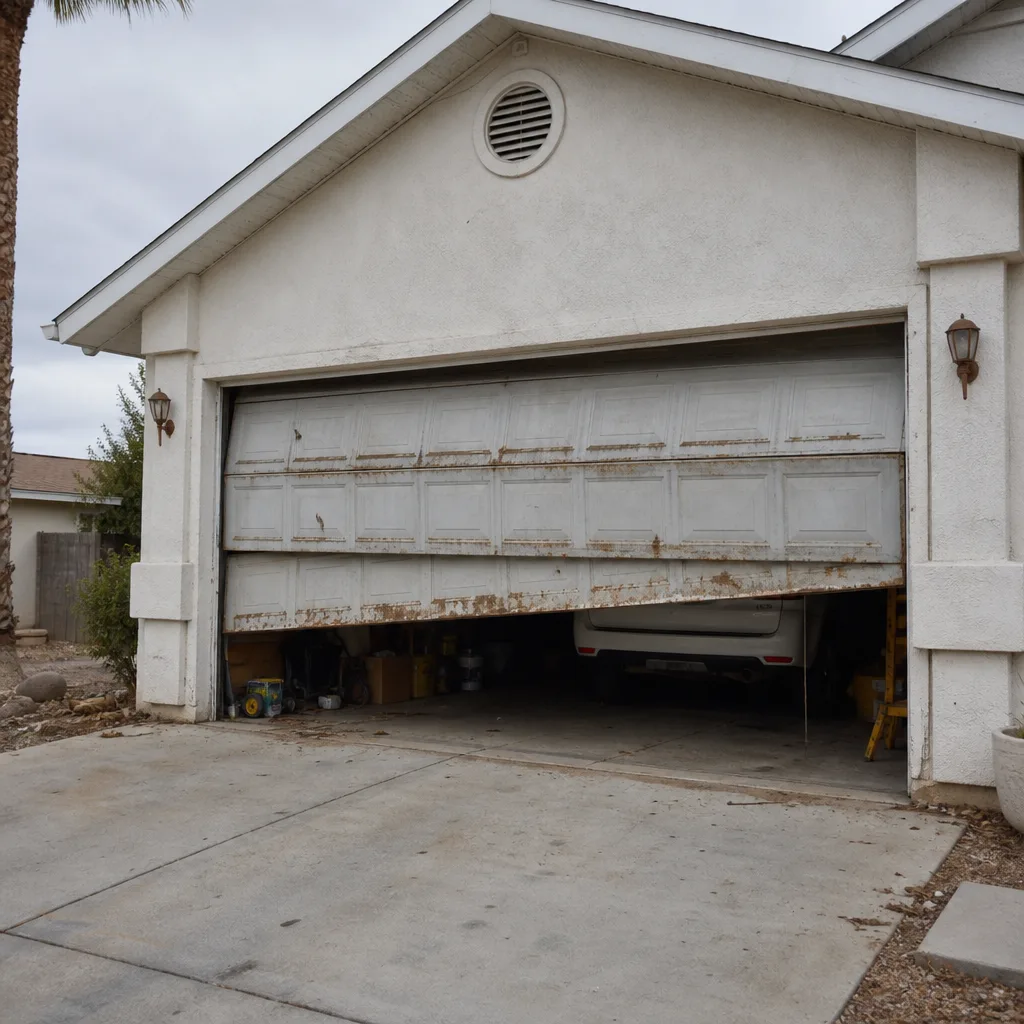
See the difference
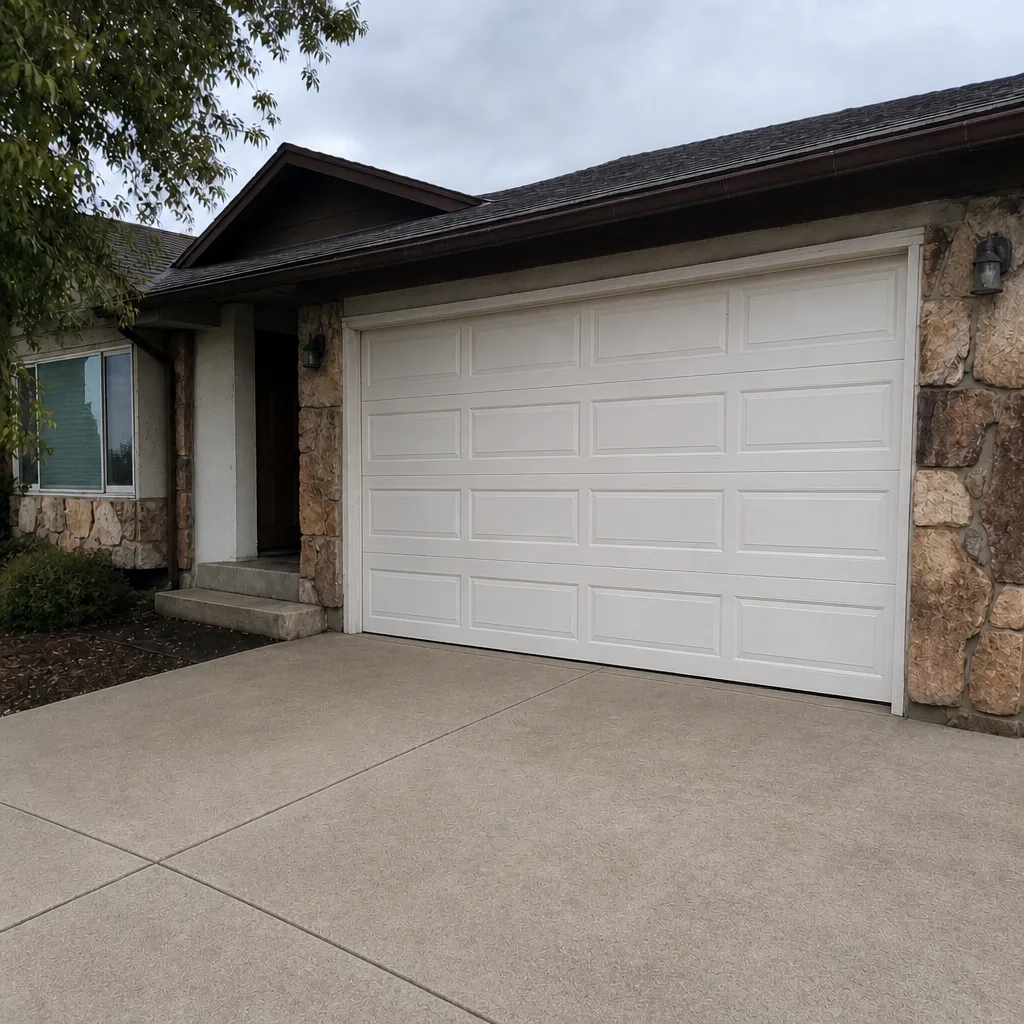
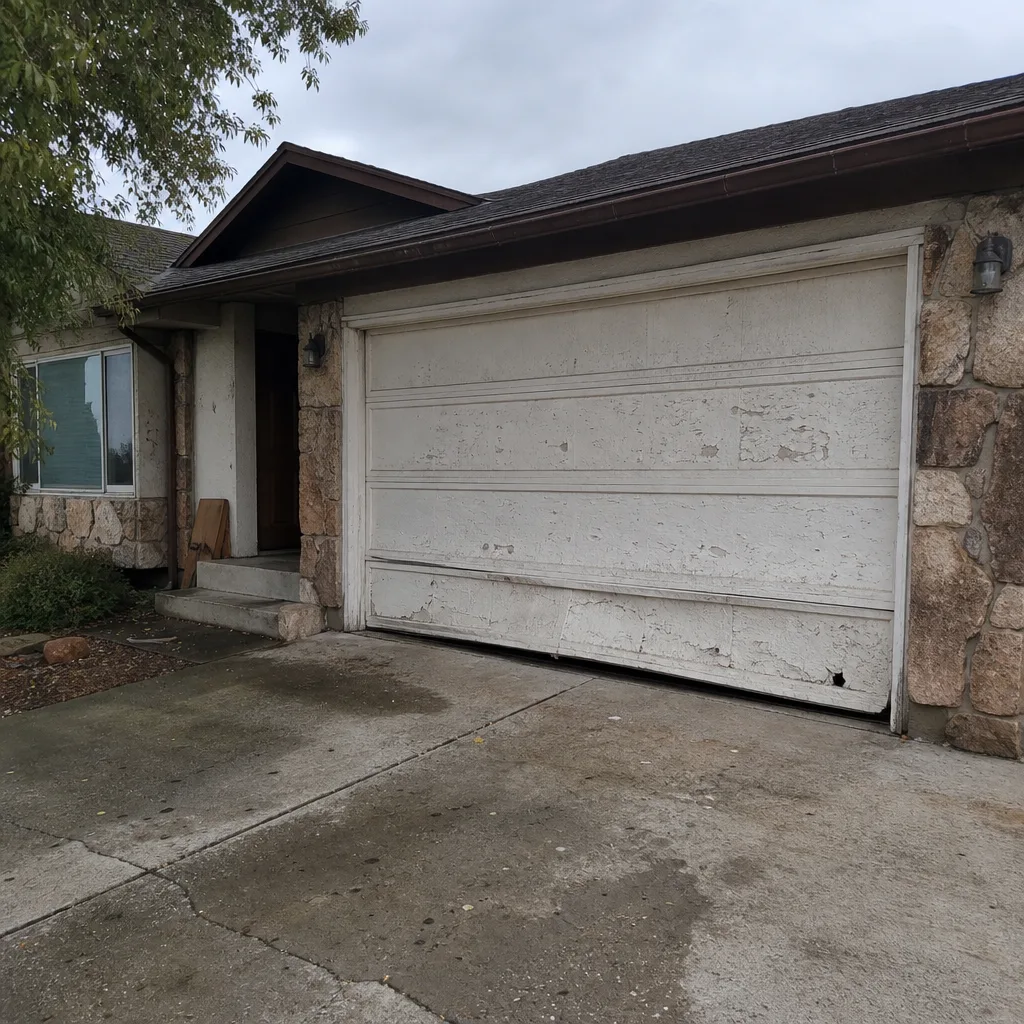 Before
 After
 Before
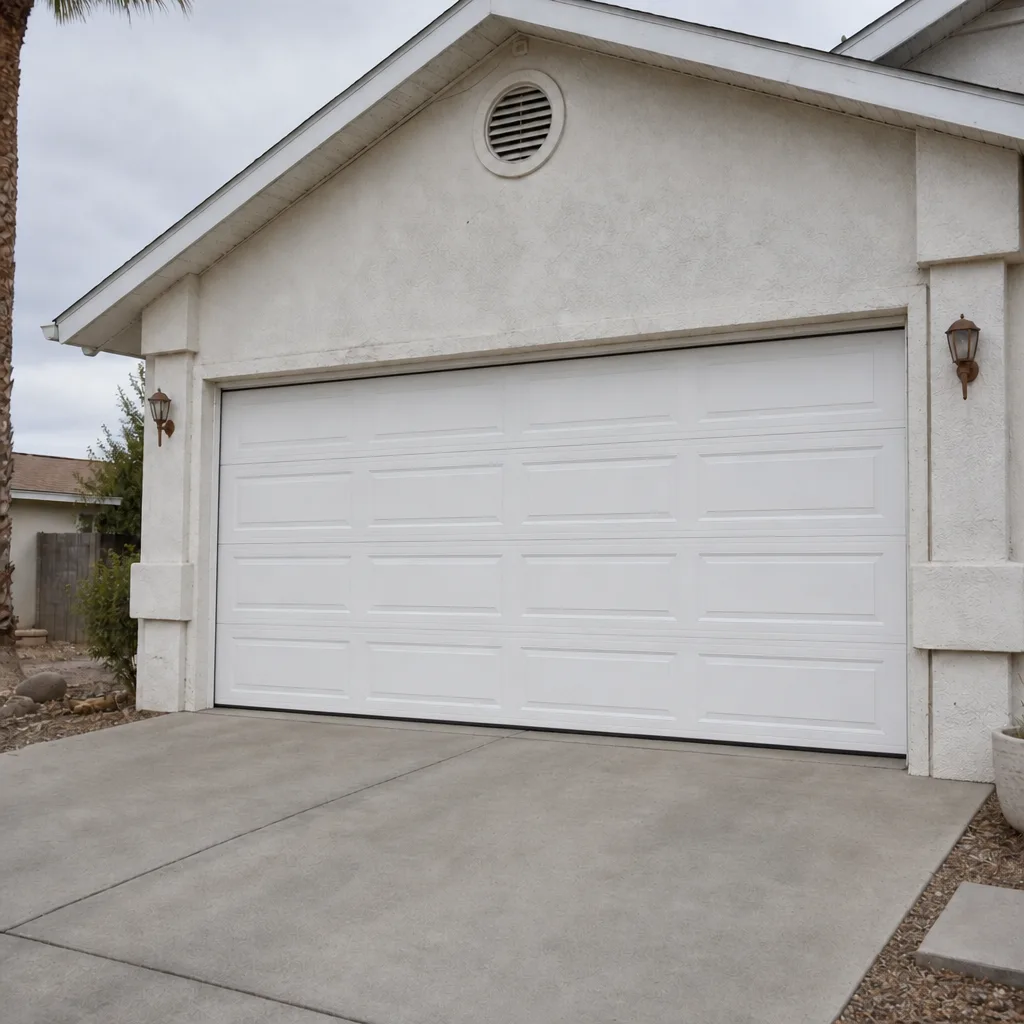 After
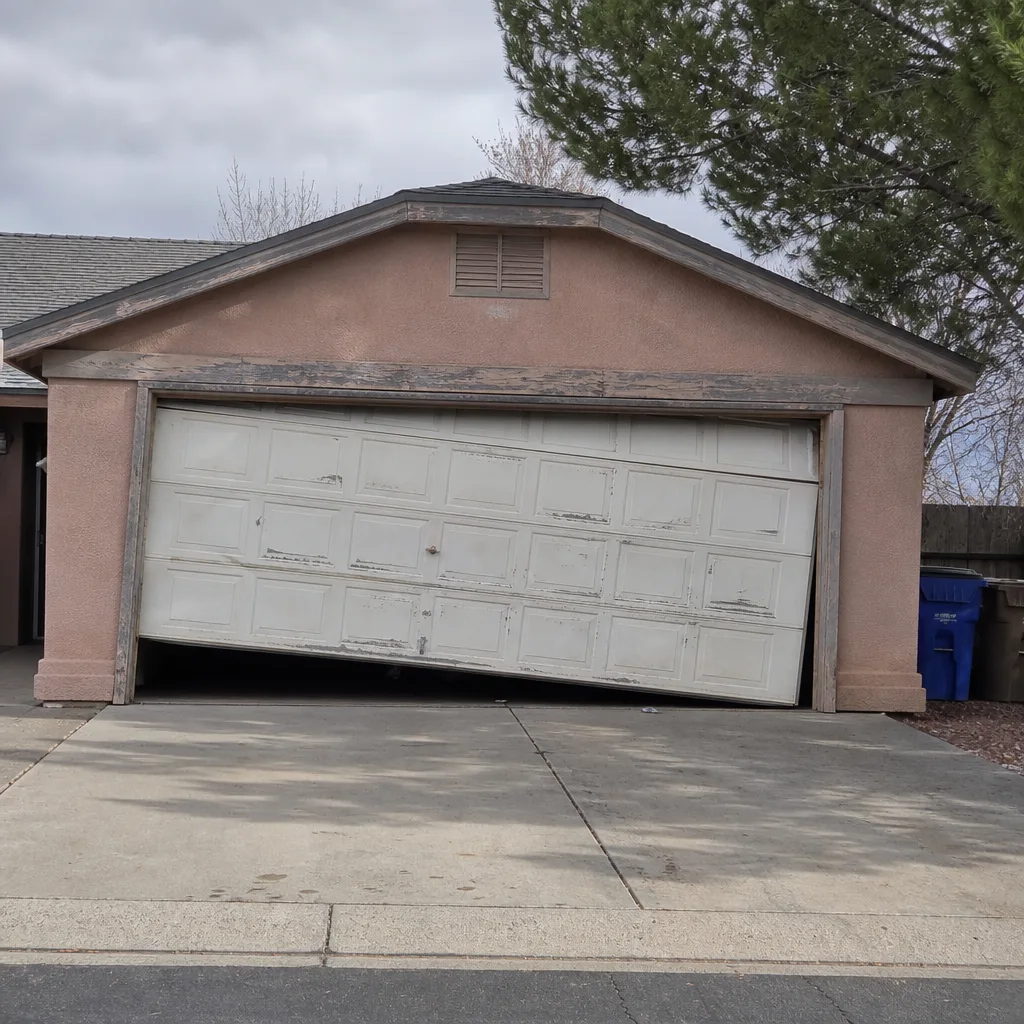 Before
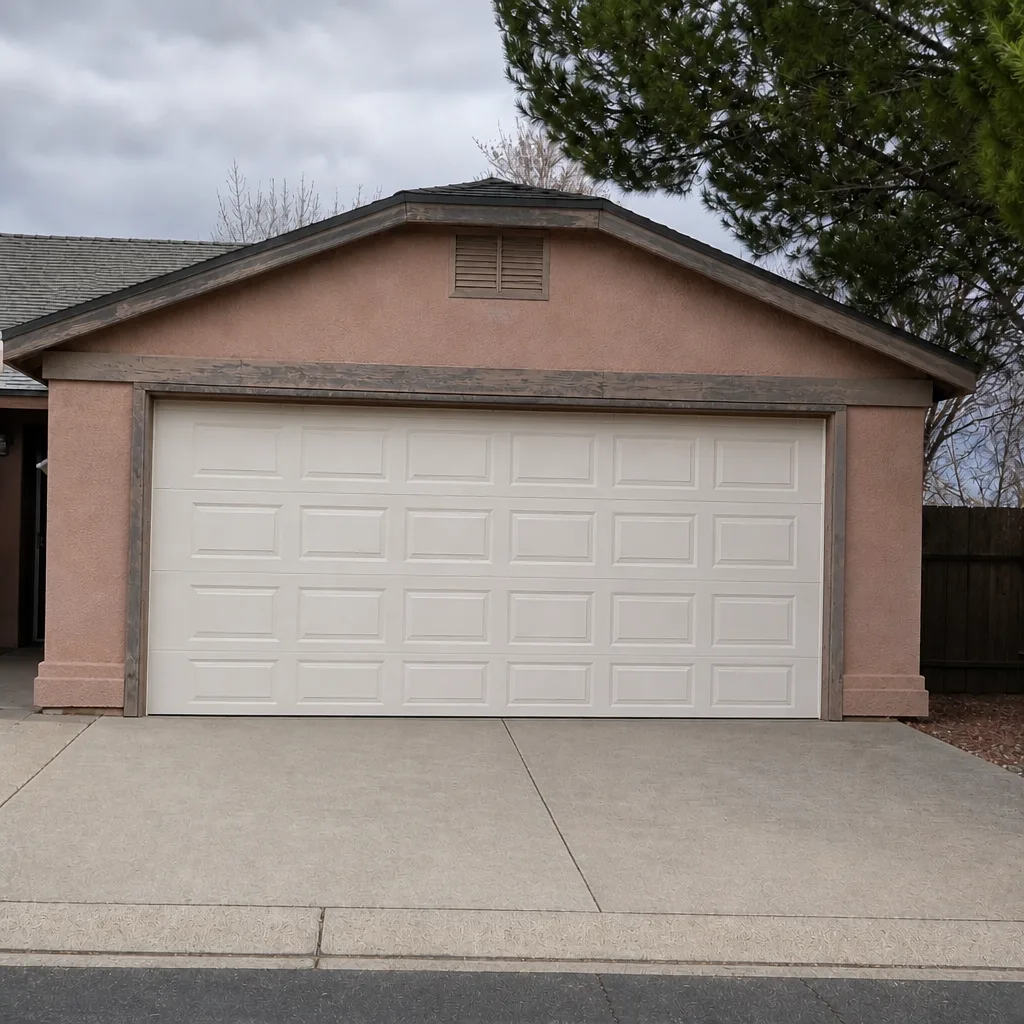 After
When to Call a Professional
Some garage door problems are genuinely dangerous, and springs are the top of that list. A torsion spring holds enough stored energy to cause serious injury, and the tools and technique needed to release and re-tension one are not a homeowner project. The same applies to any wiring work around an opener motor or a wall switch. Leave those to a trained technician. Other situations worth a call: a door that reverses unpredictably (a safety sensor or travel limit problem), a door that’s come off its track, a bent panel, a door that closes unevenly, or an opener that runs but doesn’t move the door. If the door has been serviced before and the same part keeps failing, that’s a signal to bring in a specialist rather than repeat the same fix. Rosemont Garage Door Service offers free estimates in St. George – call (866) 389-3687. We answer 24/7. Fast dispatch from 7am to 7pm, Sunday through Friday.
Frequently Asked Questions
Pricing depends on what fails. A single spring replacement is less than a matched pair, and a pair costs roughly twice a single spring since they’re usually replaced together to keep the door balanced. Opener repairs vary by component. The written estimate sets the final price and is quoted and agreed before any work starts, so the invoice matches the quote. Call (866) 389-3687 for an exact quote – estimates are free.
Utah licenses contractors through the Division of Professional Licensing, and those licenses are classified by work type. Ask a prospective contractor which classification covers their garage door work and confirm it, rather than assuming any license number applies to doors. Also ask whether a permit is needed for your specific job, and check with the St. George building department if you want certainty.
It can, yes. Manufacturers maintain authorized distribution channels, and a part sourced from an unauthorized reseller may not carry a valid manufacturer warranty. The same applies to installation done by a technician who isn’t factory-familiar with the brand. Ask where the parts come from and confirm the warranty before work begins.
Not without a conversation. The estimate is written and agreed before any work starts, and if we find something that changes the scope – a bent track, a failed opener, damaged framing – we stop and tell you before continuing. Nothing gets added to the bill after the fact. Call (866) 389-3687 for a free written estimate.
Yes. We handle garage door opener repair, door repair, and full installations through the same specialist team. If a door is at the end of its life, the installation quote comes from the same people who’ve been servicing it, so nothing gets lost in a handoff. Installation work is measured, ordered, and scheduled rather than same-day.
We’re certified to service eight leading brands: LiftMaster, Chamberlain, Genie, Clopay, Amarr, Wayne Dalton, Craftsman, and Raynor. That covers most equipment already installed in homes around St. George, so brand mismatch is rarely a reason to call someone else. Name the brand when you call and we’ll confirm we’ve worked on that system.
The Bottom Line
Hiring a garage door contractor in St. George comes down to four questions: is garage doors their only trade, are they factory-familiar with the brand on your door, do you get a written itemized estimate before work starts, and do you get both a parts and a labor warranty in writing. Answer those and you’ve filtered out the generalists, the app-dispatch operations, and the markup shops. Same-day availability is a bonus, not a signal. Our technicians have up to 13 years of experience, and we work the flat-rate way, so the estimate you get is the number you pay. If you’re comparing bids in St. George, we’re happy to be one of them.
Call (866) 389-3687 for a free estimate. We answer 24/7. Fast dispatch from 7am to 7pm, Sunday through Friday.
Written by the team at Rosemont Garage Door Service.